A Nashville Boudoir Photographer on Shame, Visibility, and the Permission to Exist
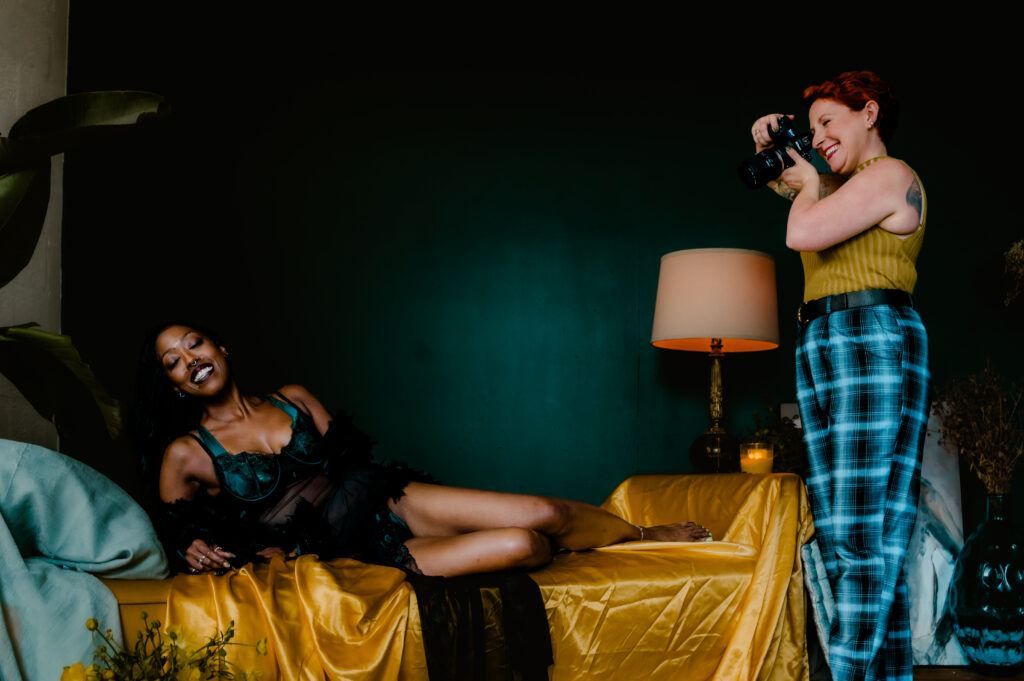
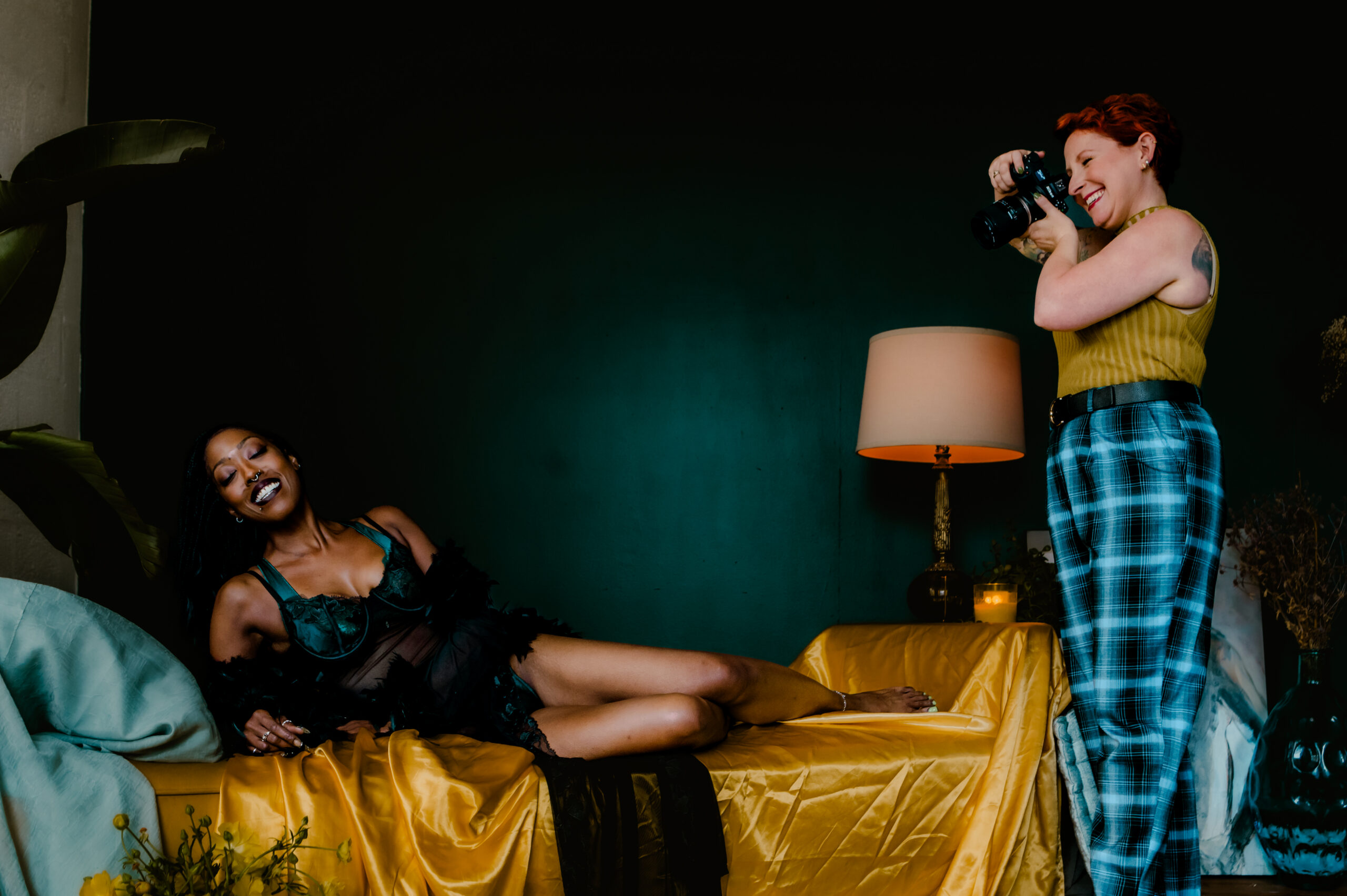
One of the things I think about most as a Nashville boudoir photographer is how many people apologize for themselves before I even pick up my camera.
Maybe you’ve done it too.
Sometimes it sounds like:
“I need to lose weight first.”
“I’m awkward in photos.”
“I’m not confident enough.”
“I don’t know how to be sexy.”
“I’m nervous.”
Other times, it’s quieter than that — just the feeling that you somehow need to become a different version of yourself before you deserve to be seen.
And honestly, I get it.
Most of us were taught to monitor ourselves long before we were taught to actually inhabit ourselves. That’s especially true for women, queer folks, and anyone whose body has been criticized, politicized, objectified, or treated like a problem to solve.
Because of that, I know that when many people book a boudoir session, it usually isn’t just about wanting beautiful photos.
More often, there’s something deeper underneath it.
For some people, the experience is about reconnecting with themselves or feeling visible again after a long period of disconnection. For others, it comes from curiosity, healing, celebration, or simply the desire to exist in photographs differently than they have before.
Sometimes, though, it’s about wanting proof that you’re allowed to exist exactly as you are right now — not ten pounds from now, not once you feel more confident, and not after you’ve finally learned how to stop being so hard on yourself.
That’s a vulnerable thing to carry into a photoshoot.
So first, I want you to know this:
you do not need to earn the right to be photographed.
You Do Not Need to Arrive Already Confident
One of the biggest misconceptions about boudoir photography is the idea that confidence has to come first.
A lot of people think they need to arrive already fully self-assured and comfortable in their body before they’re “ready” for a session like this.
However, in my experience, almost nobody walks into a boudoir session feeling completely fearless.
In fact, many people arrive nervous. Some feel excited and terrified at the same time, while others have spent years avoiding cameras altogether.
That’s normal.
You don’t need modeling experience, a perfect understanding of posing, or the ability to “perform” confidence in order to deserve this experience.
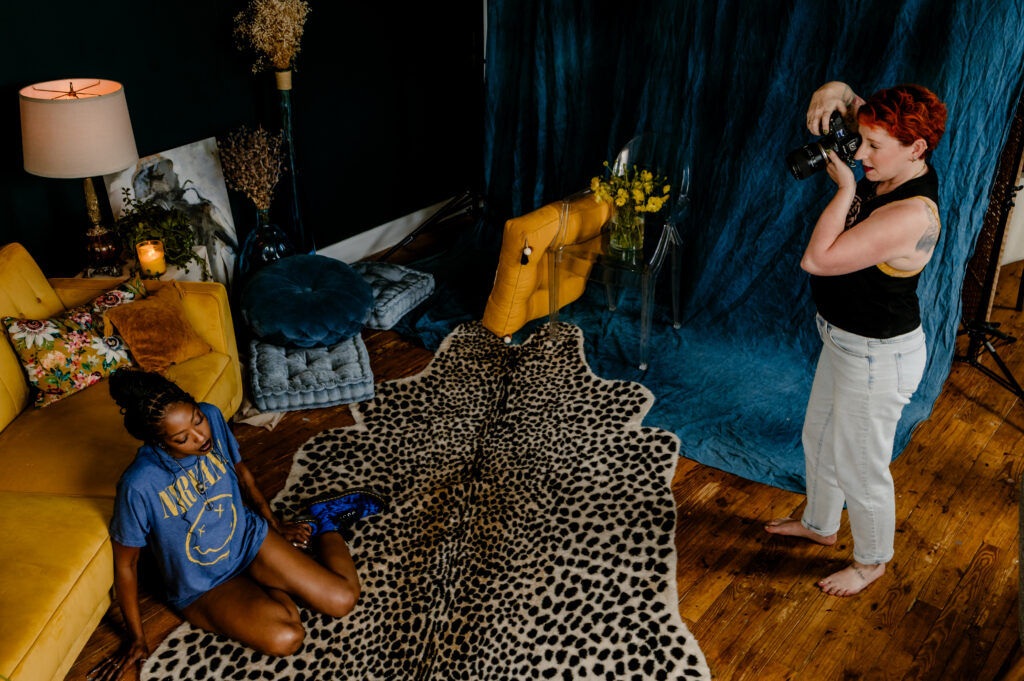
Instead, my job is to create an environment where you can slowly settle into yourself enough to stop overthinking every little thing.
Because ultimately, I’m not interested in photographing some perfected future version of you.
I’m interested in photographing you.
Not a filtered version or a carefully managed performance, but the version of you that already exists underneath all the pressure to appear more acceptable, desirable, polished, or confident.
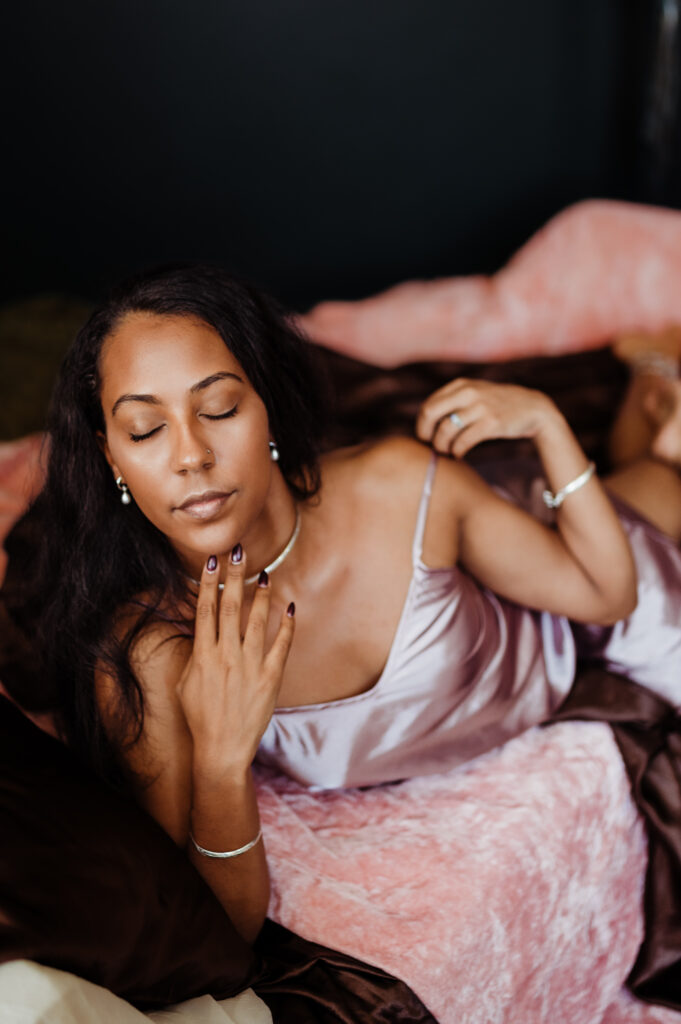
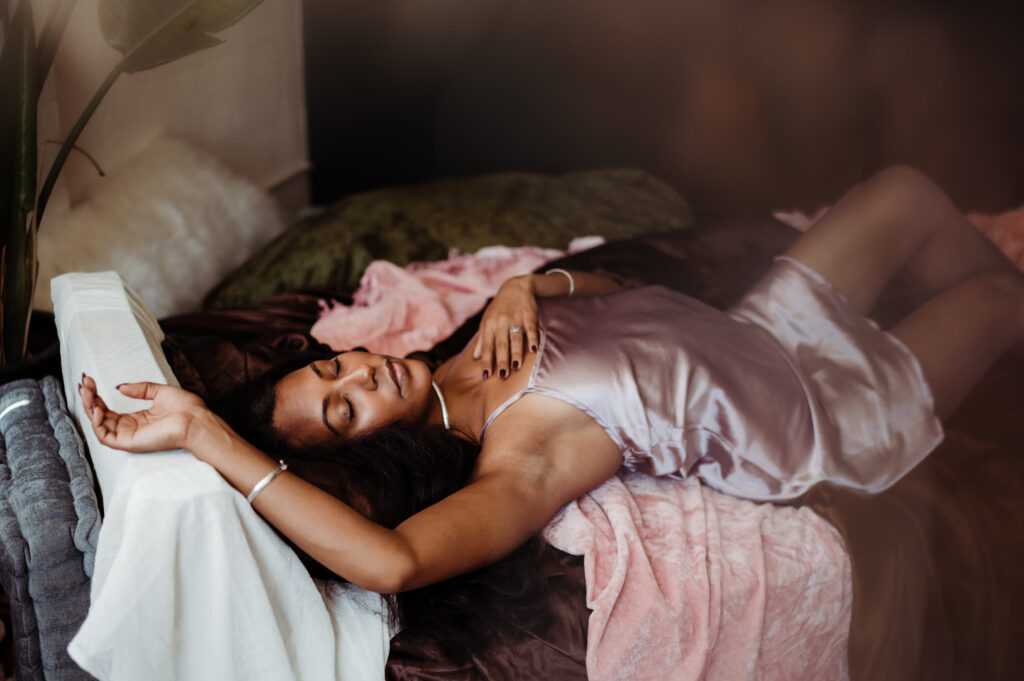
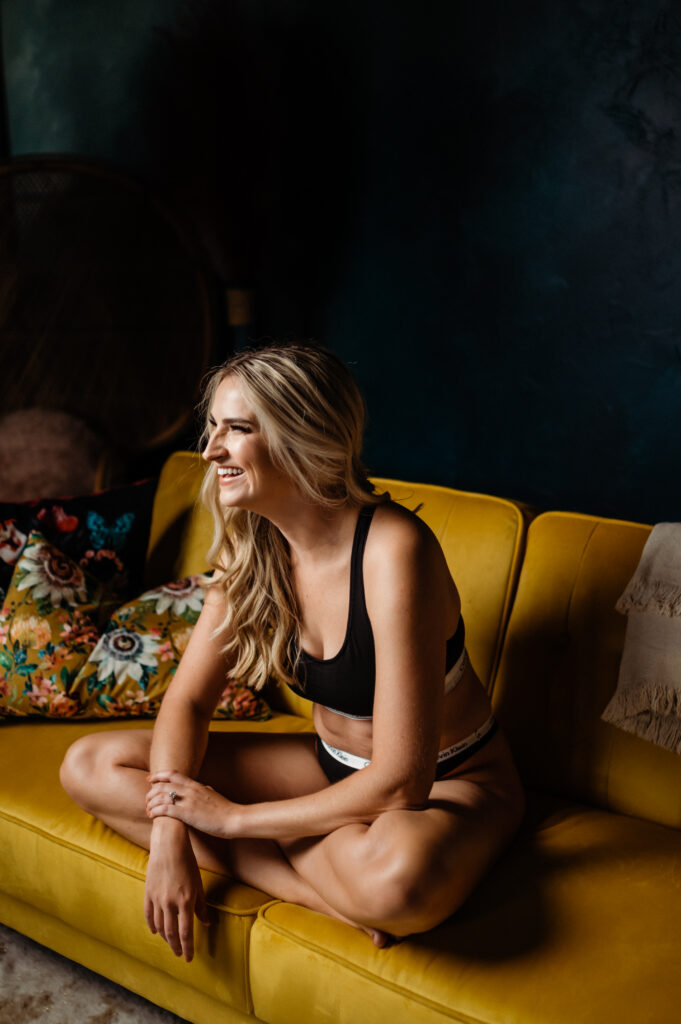
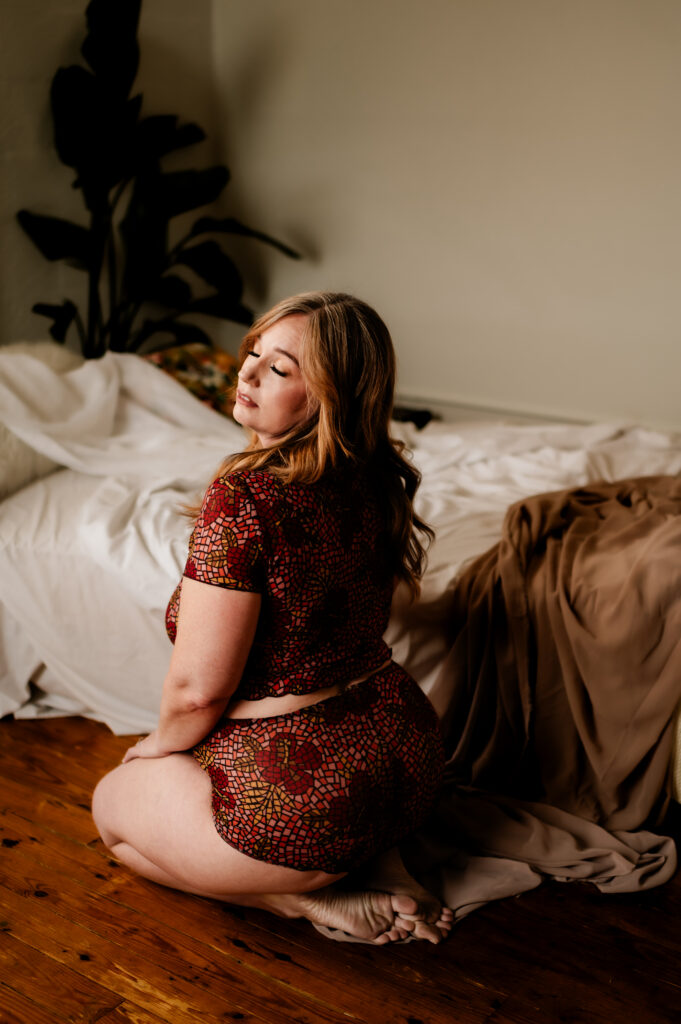
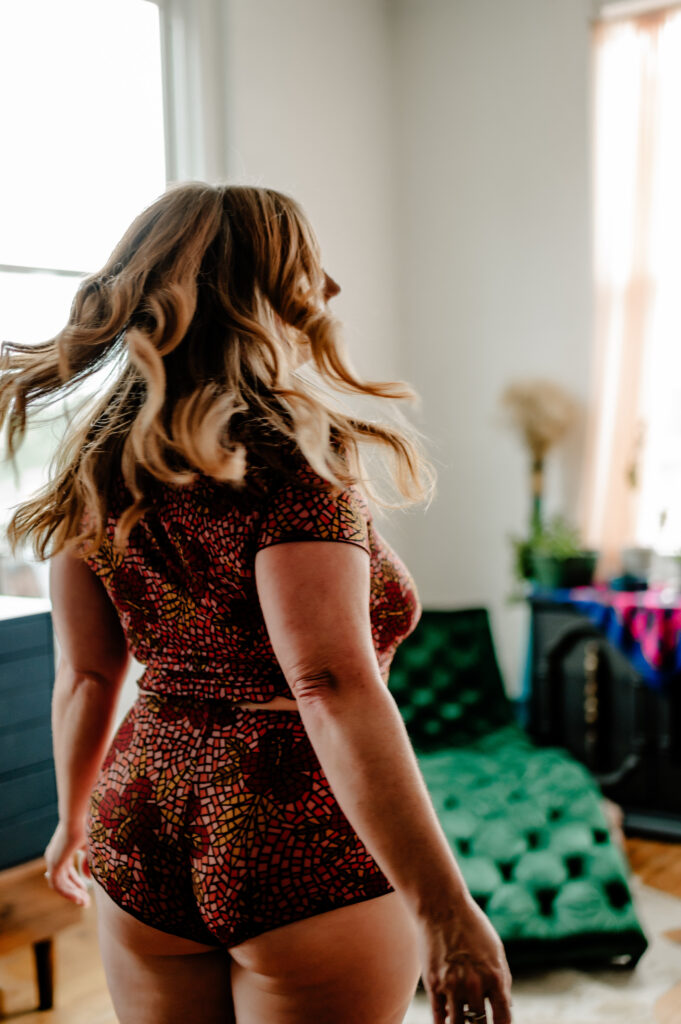
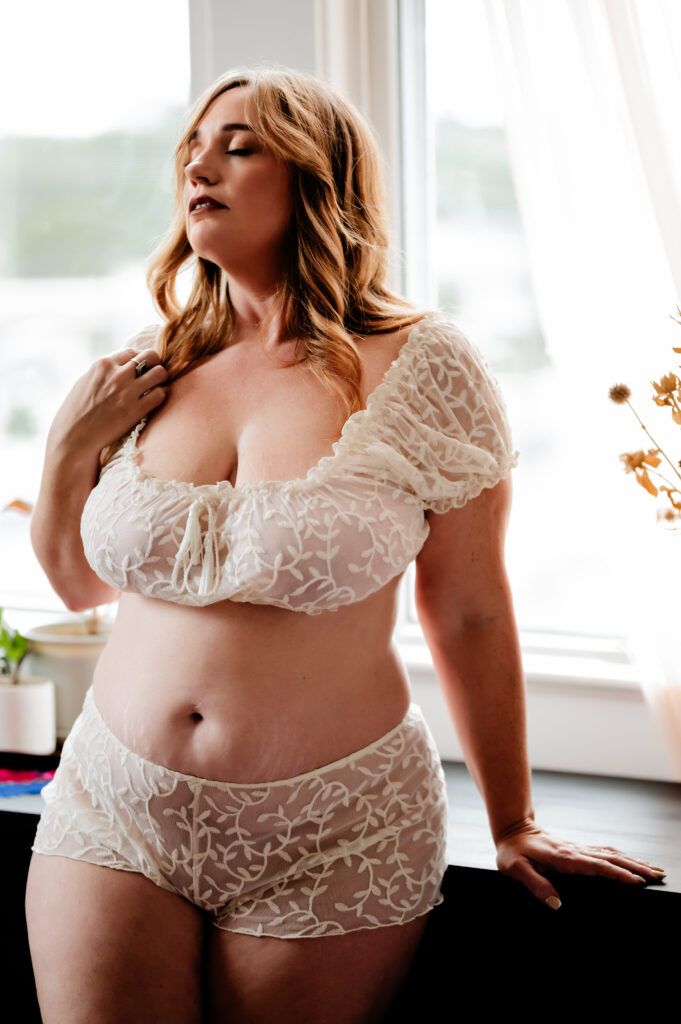
Boudoir, to Me, Has Never Been About Perfection
There are absolutely boudoir spaces that focus heavily on polish, fantasy, and traditional ideas of sexiness. And there’s nothing inherently wrong with that.
Still, my work has always been rooted in something a little different.
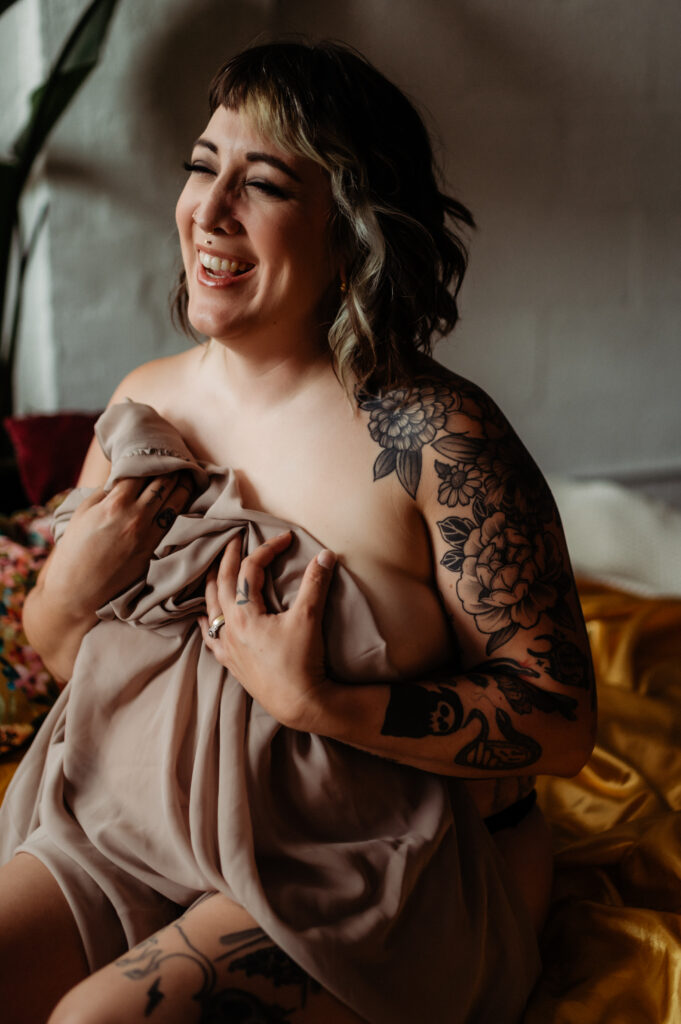
Personally, I’m far less interested in perfection than I am in presence.
What matters most to me is whether someone feels emotionally safe enough to actually arrive in the experience instead of spending the entire session trying to manage how they’re being perceived.
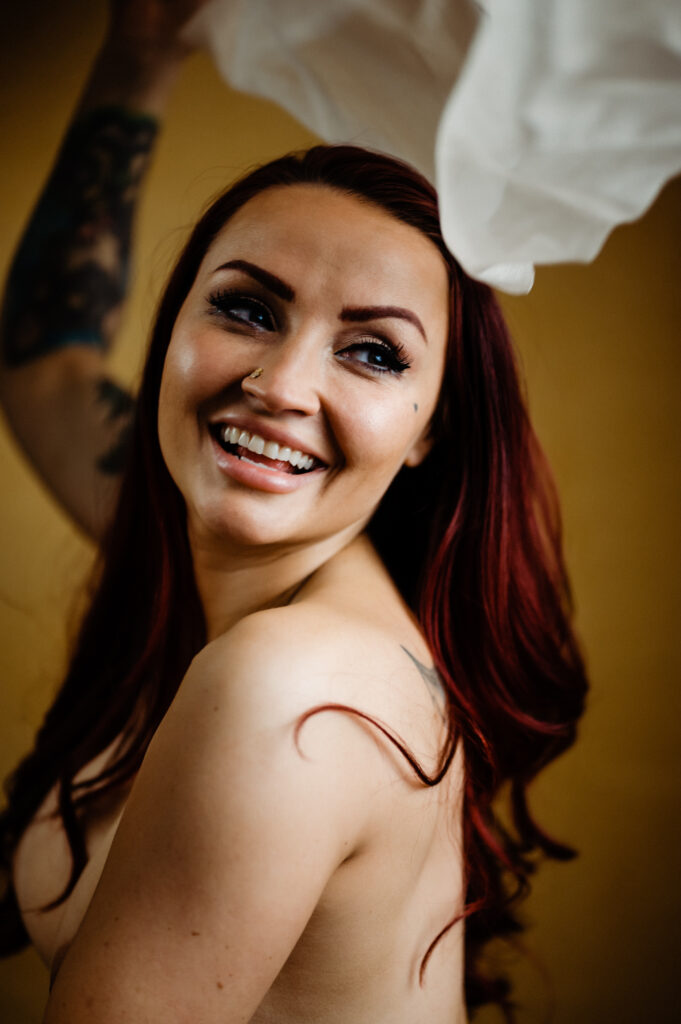
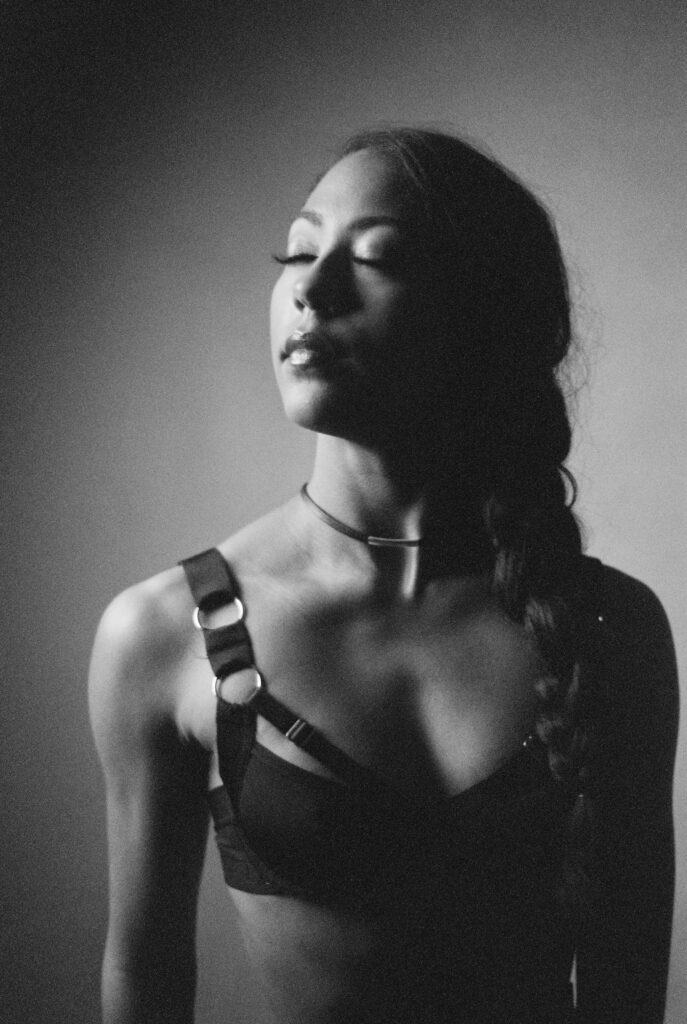
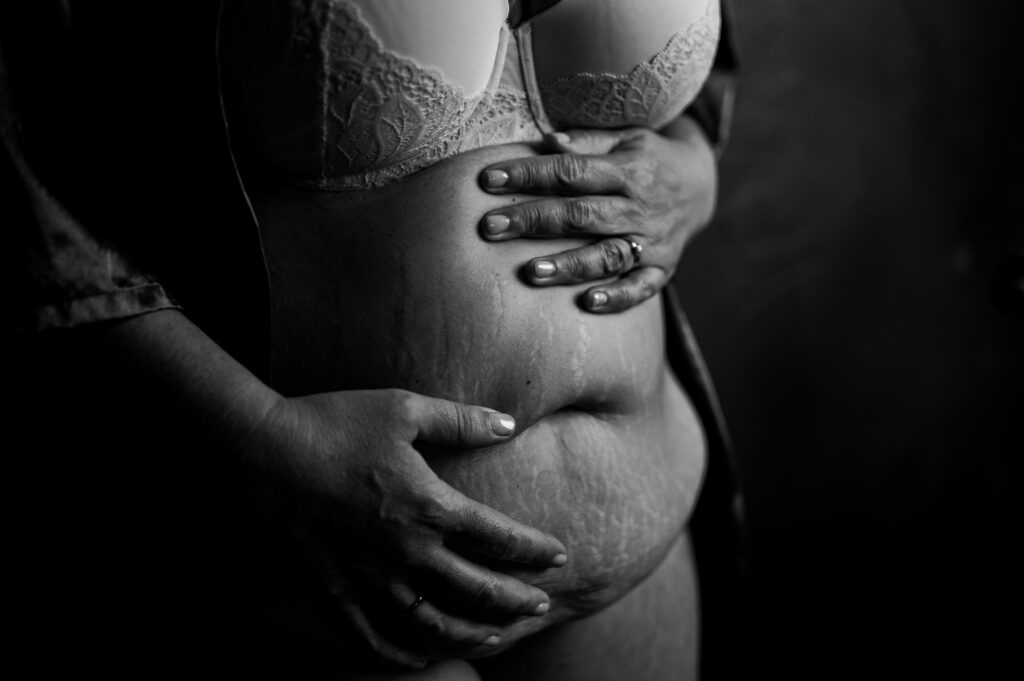
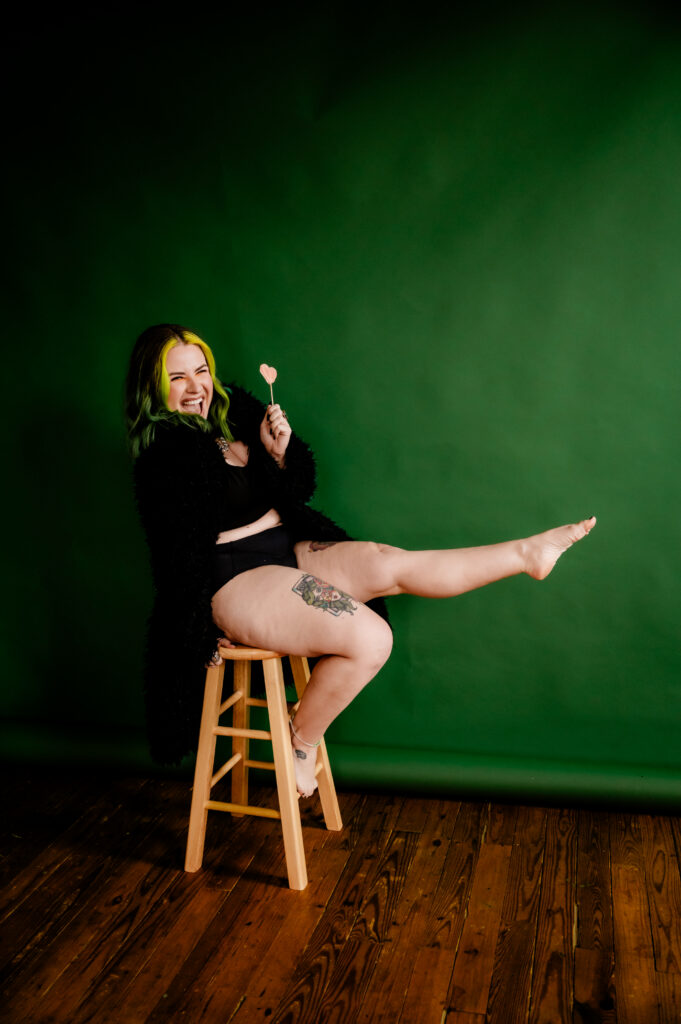
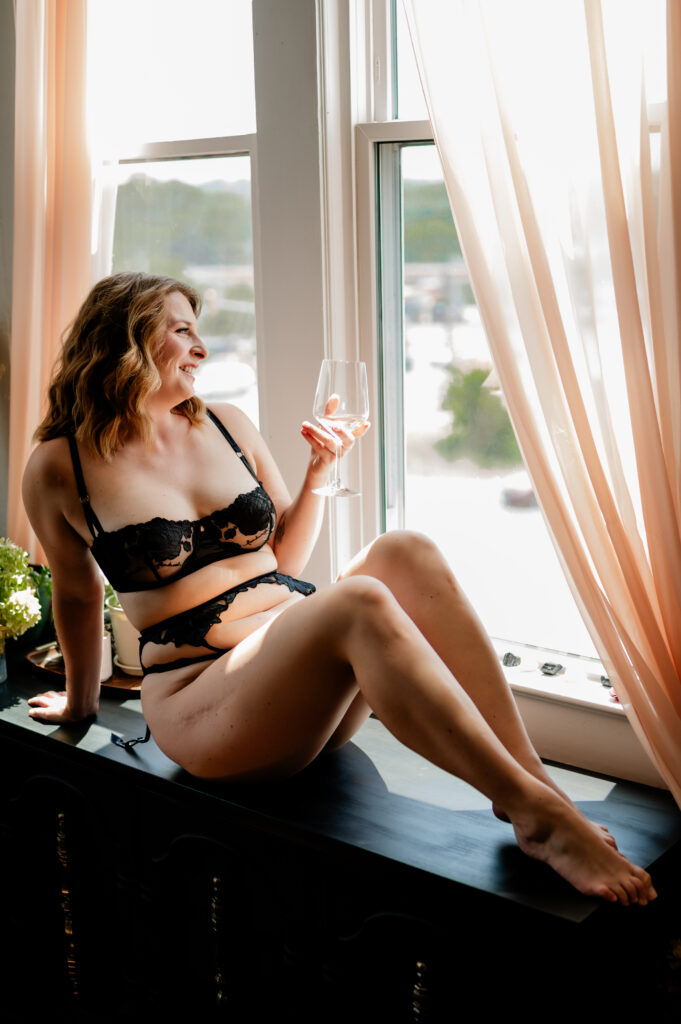
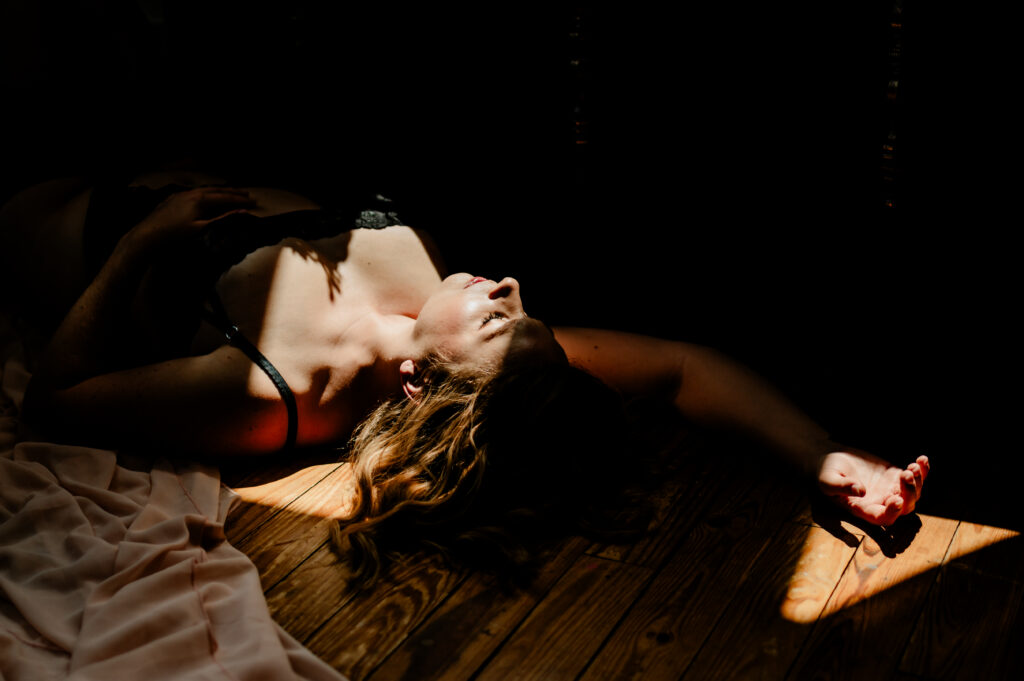
Every session carries its own energy. Some feel bold and sensual, while others lean softer, quieter, more emotional, playful, strange, cinematic, or deeply vulnerable. Certain shoots become highly stylized and artistic, while others feel stripped down and intimate in a more documentary-like way.
All of those experiences are welcome here.
Because to me, boudoir isn’t really about becoming someone else. Instead, it’s about seeing yourself outside the shame you were taught to carry.
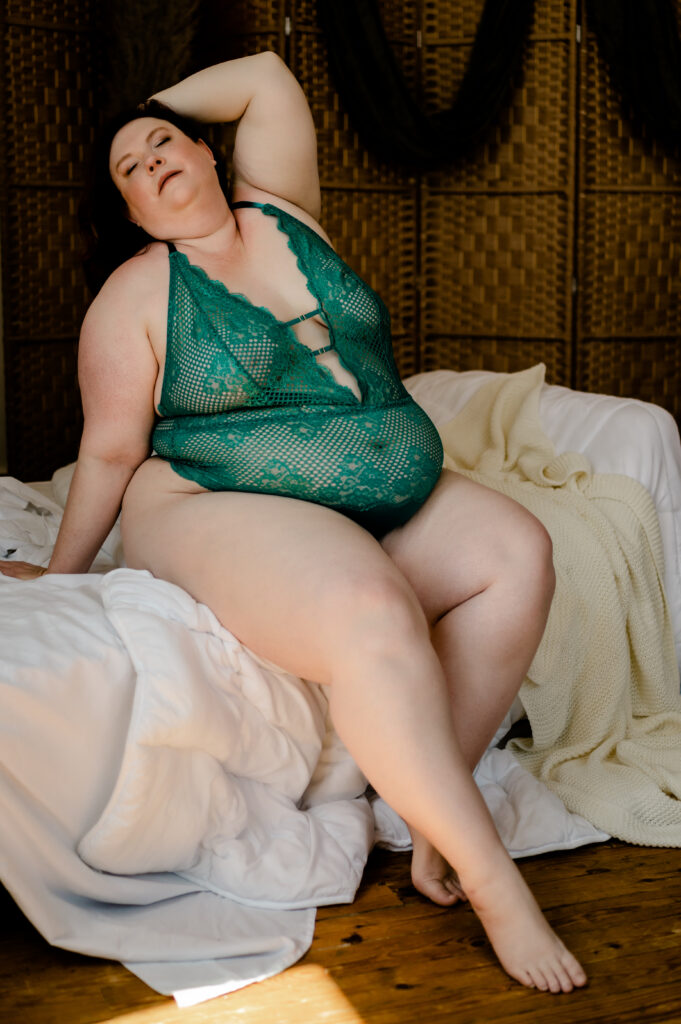
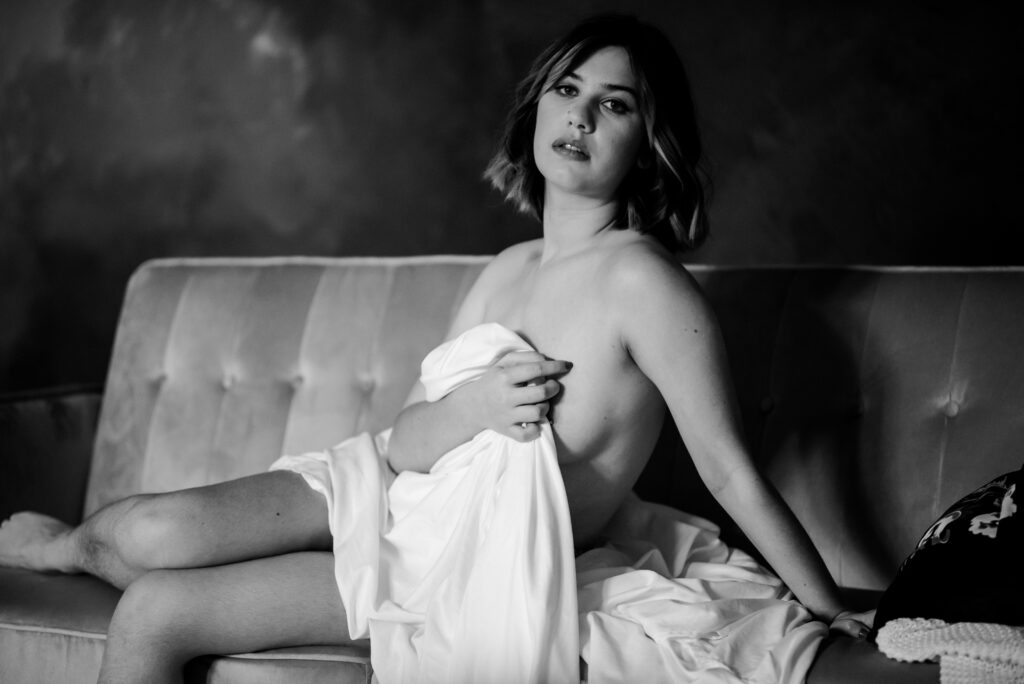
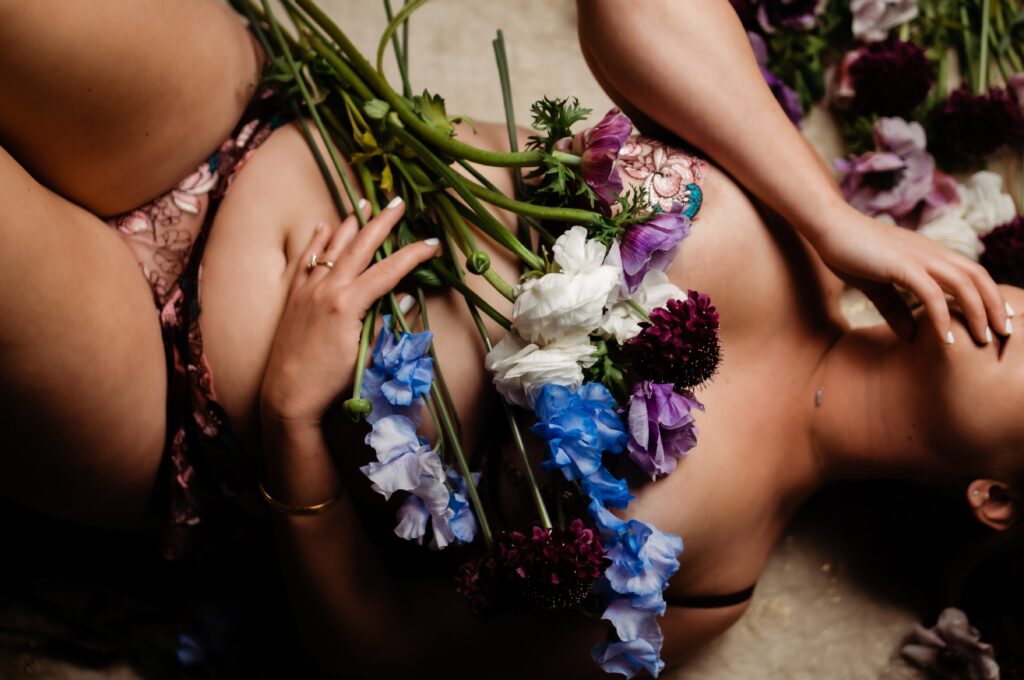
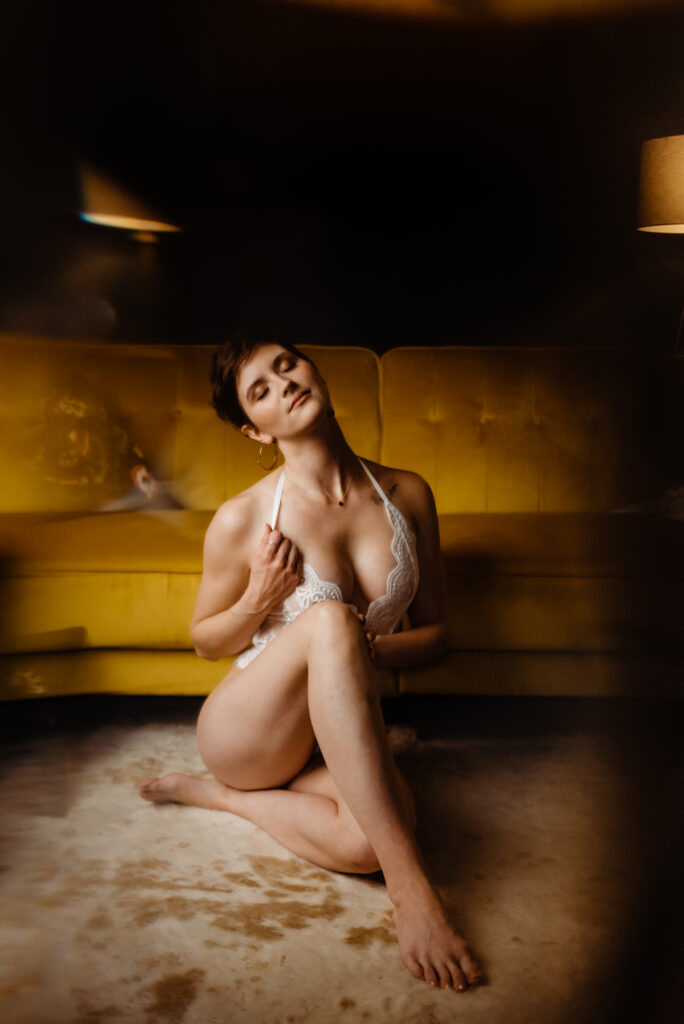
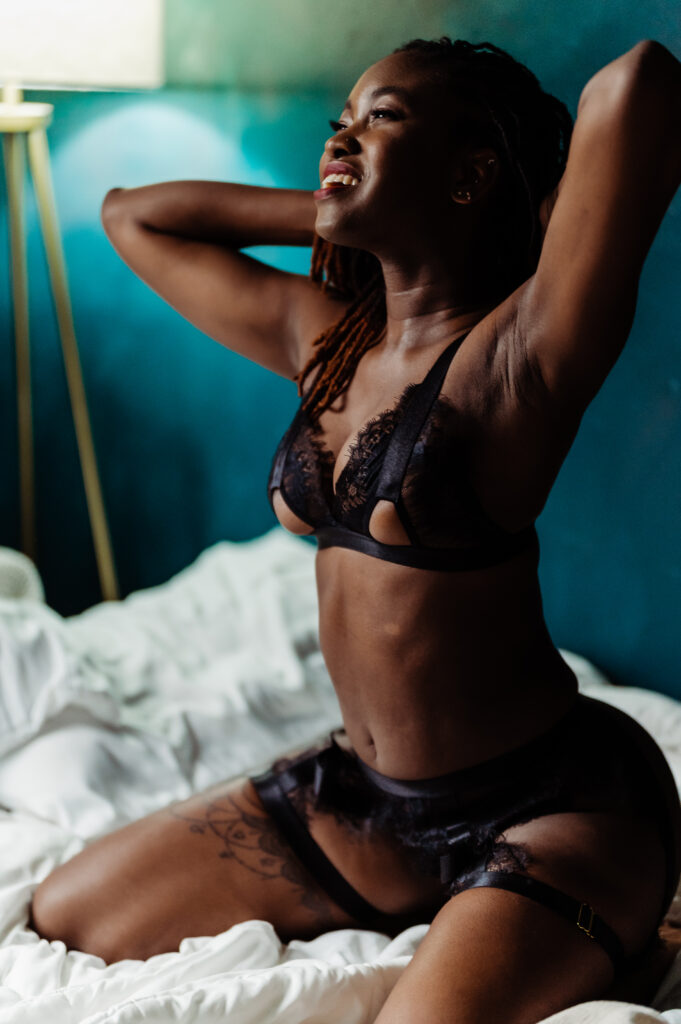
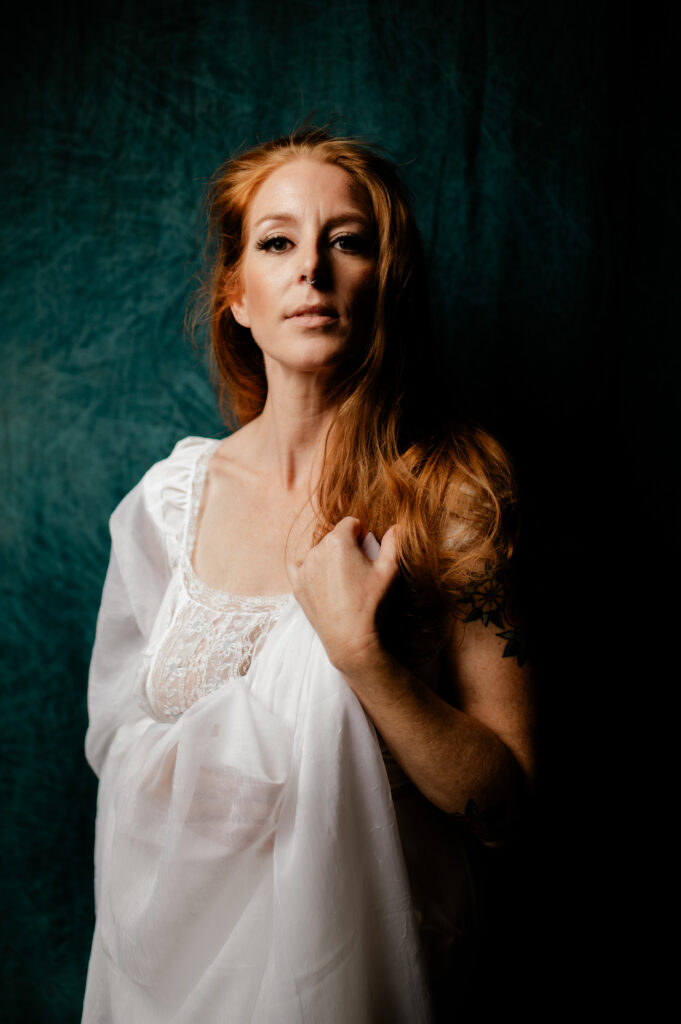
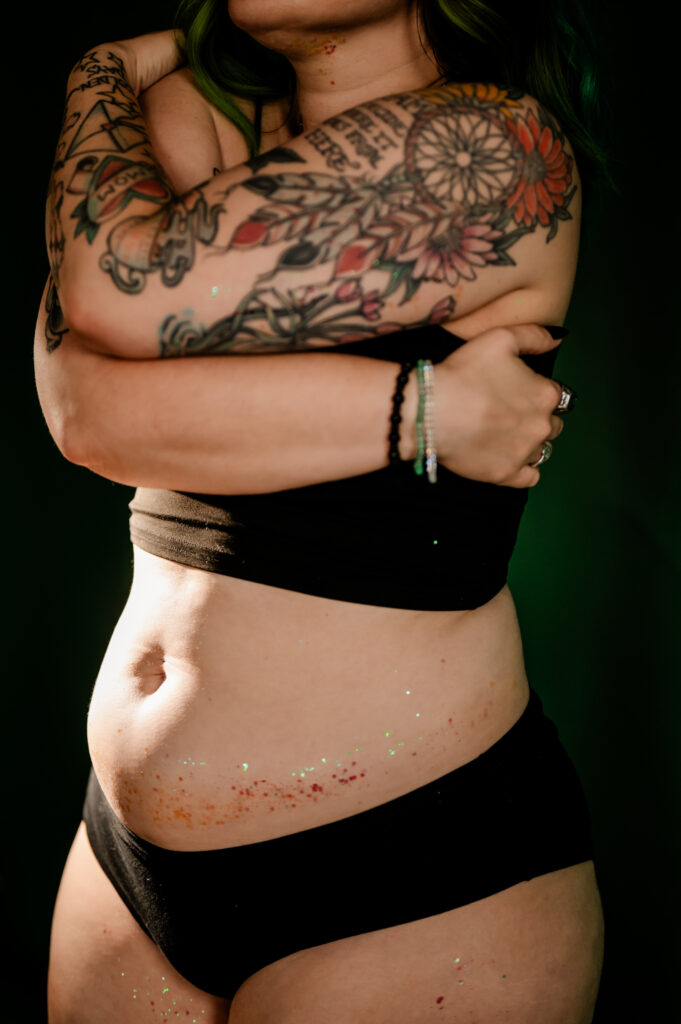
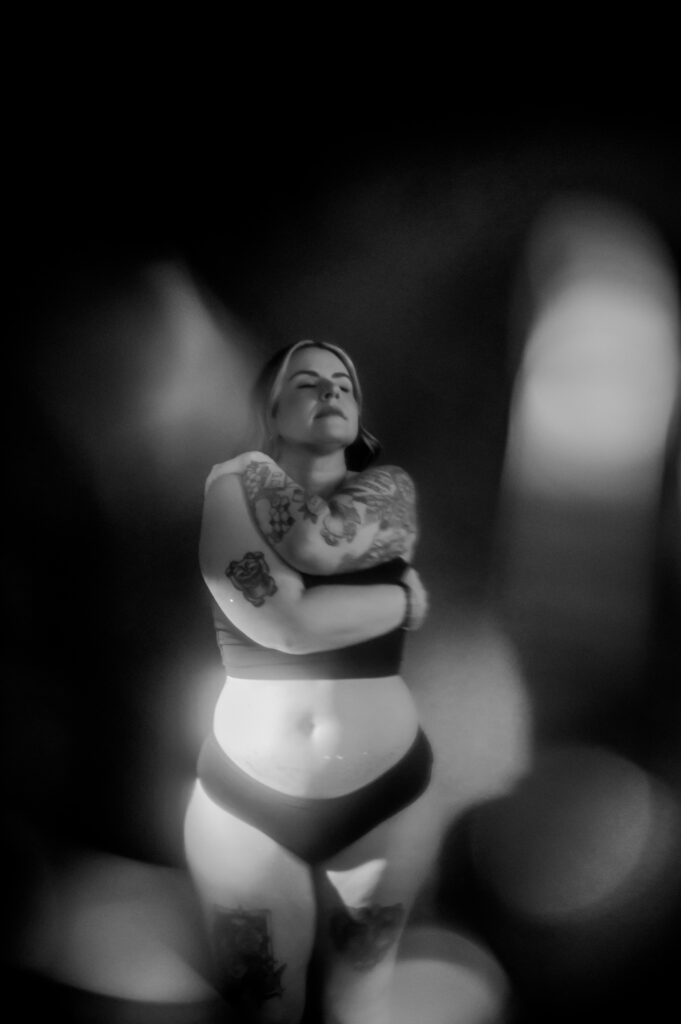
The Visual Atmosphere Matters Deeply to Me
Even though the emotional experience sits at the center of my work, the visual side matters enormously to me too.
Artistry is part of how I communicate emotion.
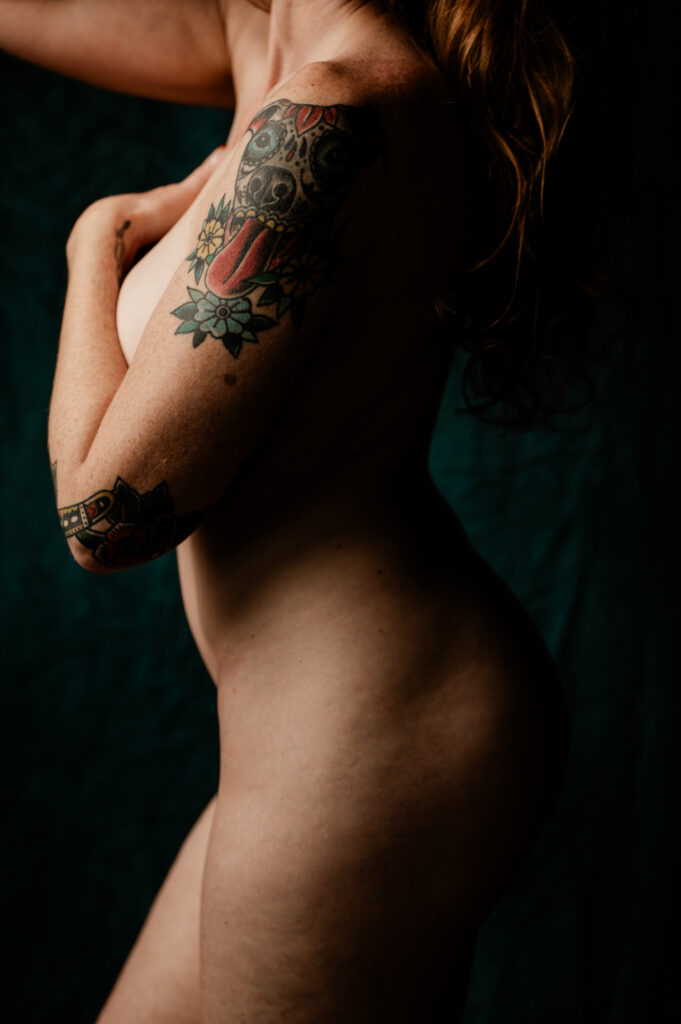
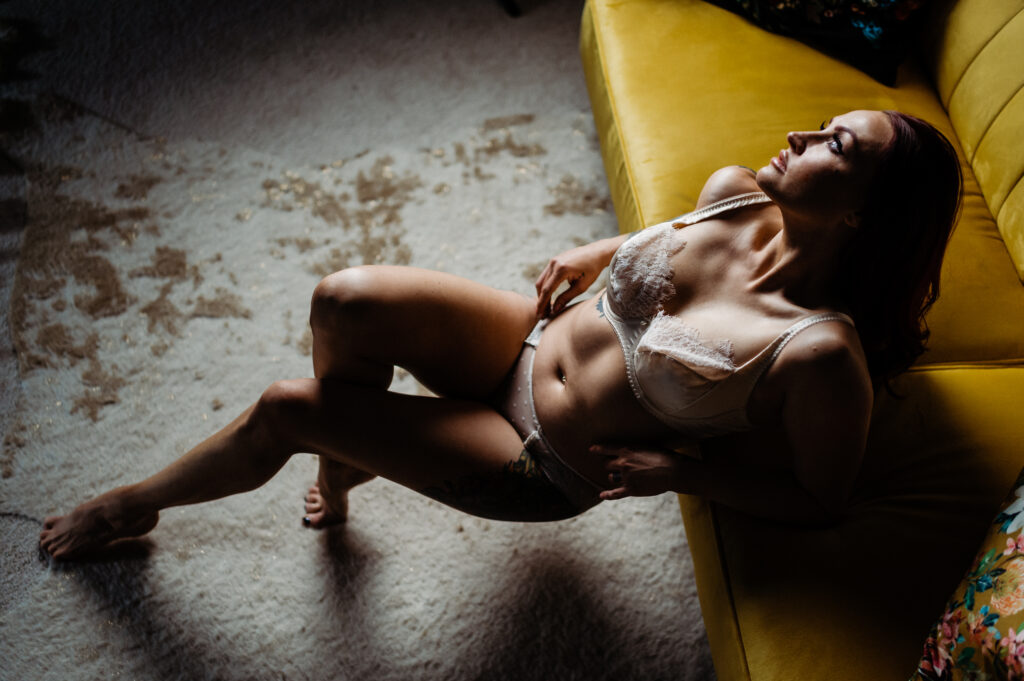
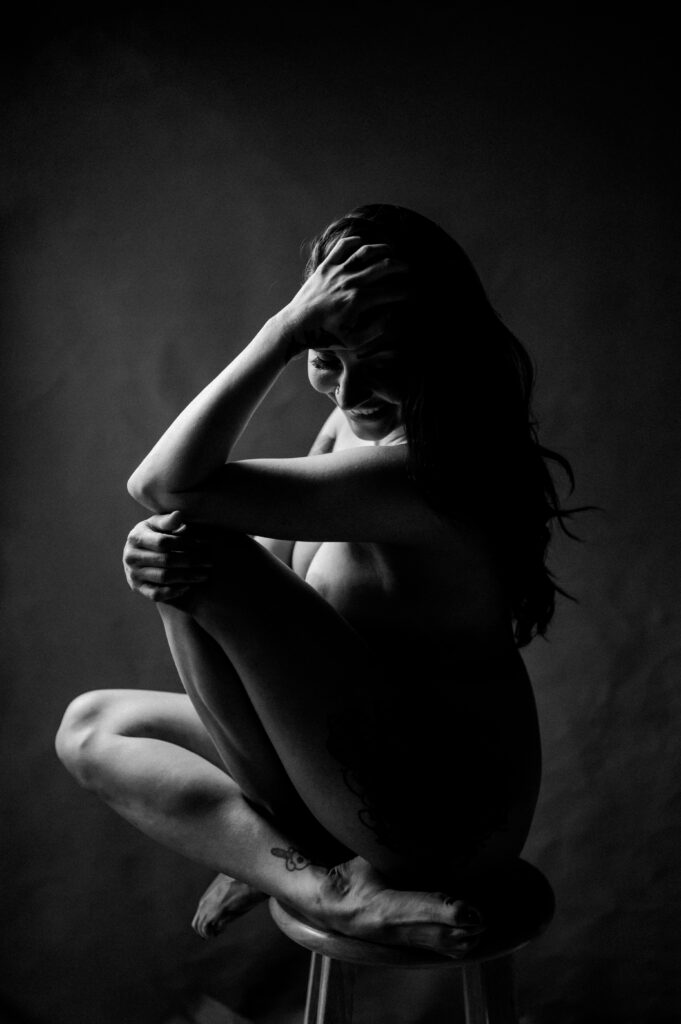
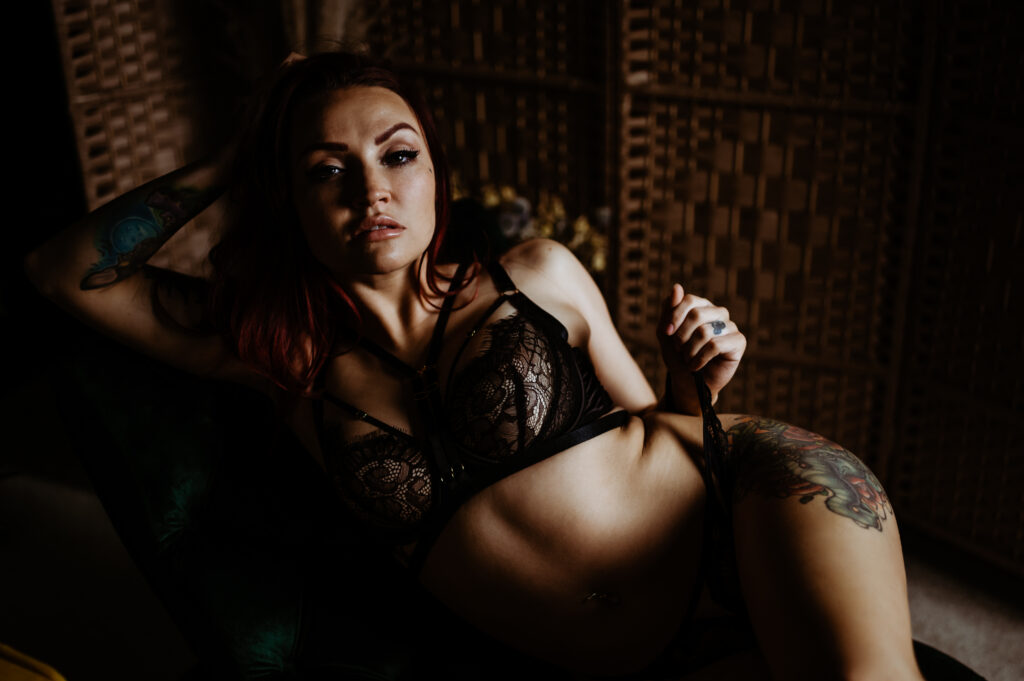
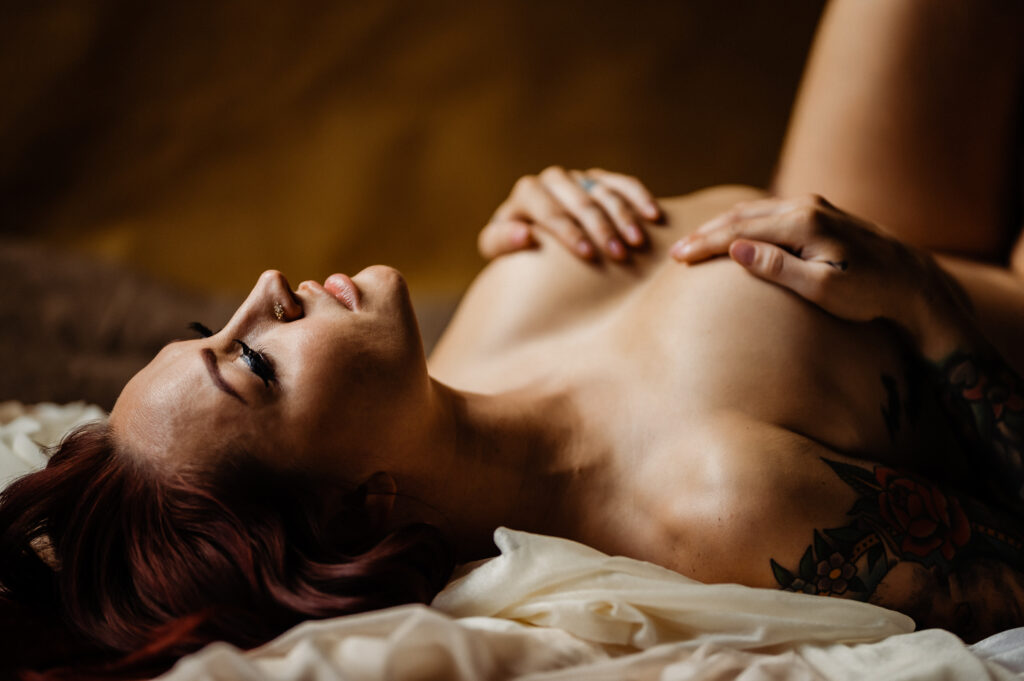
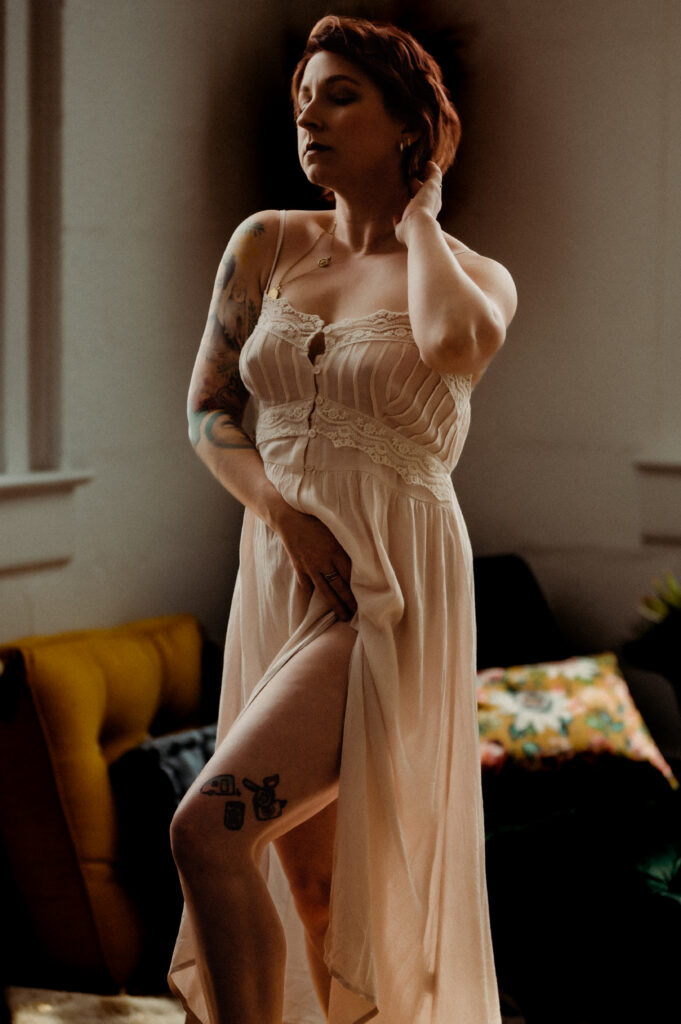
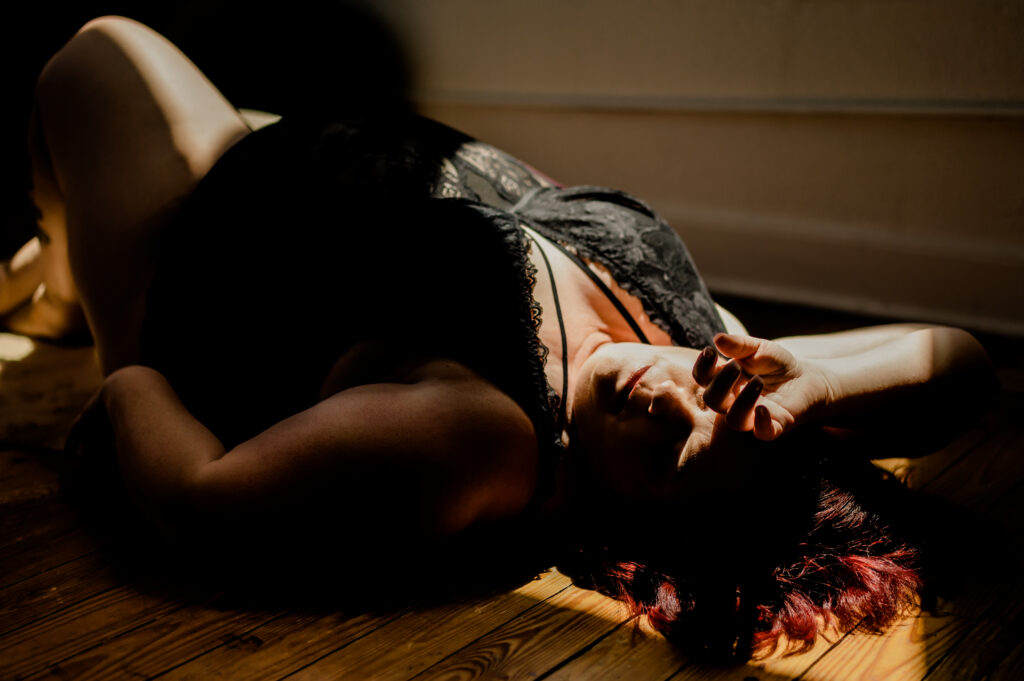
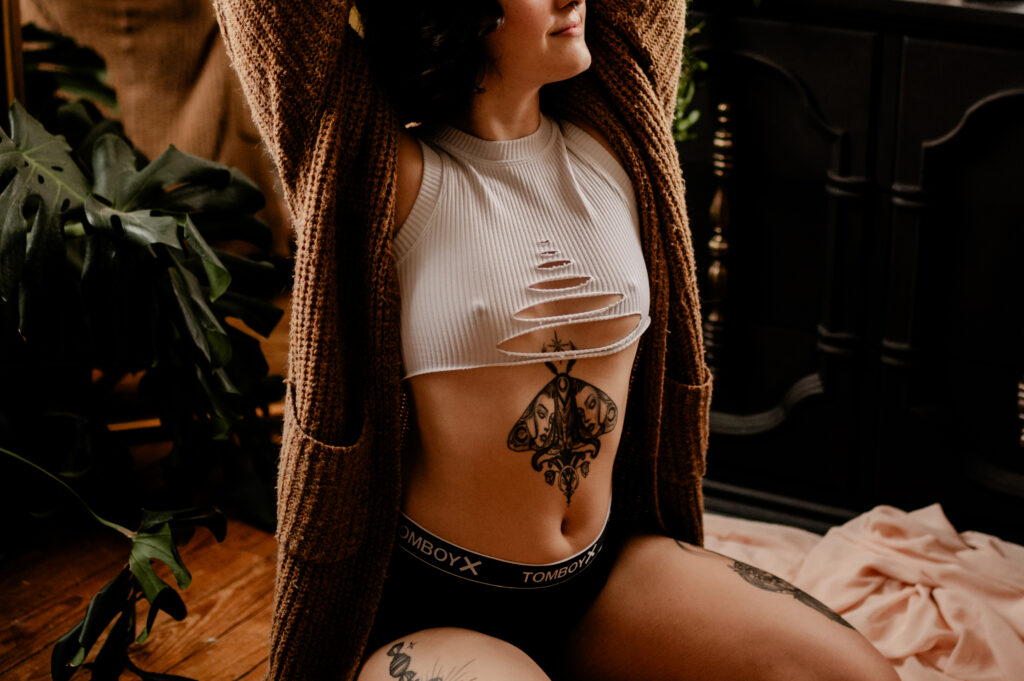
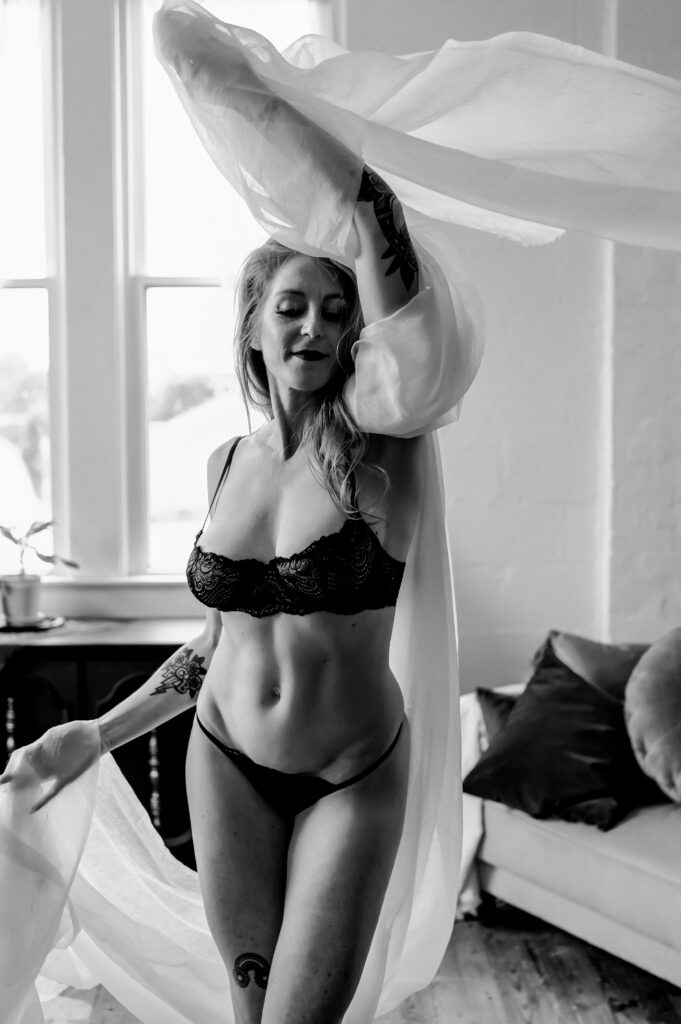
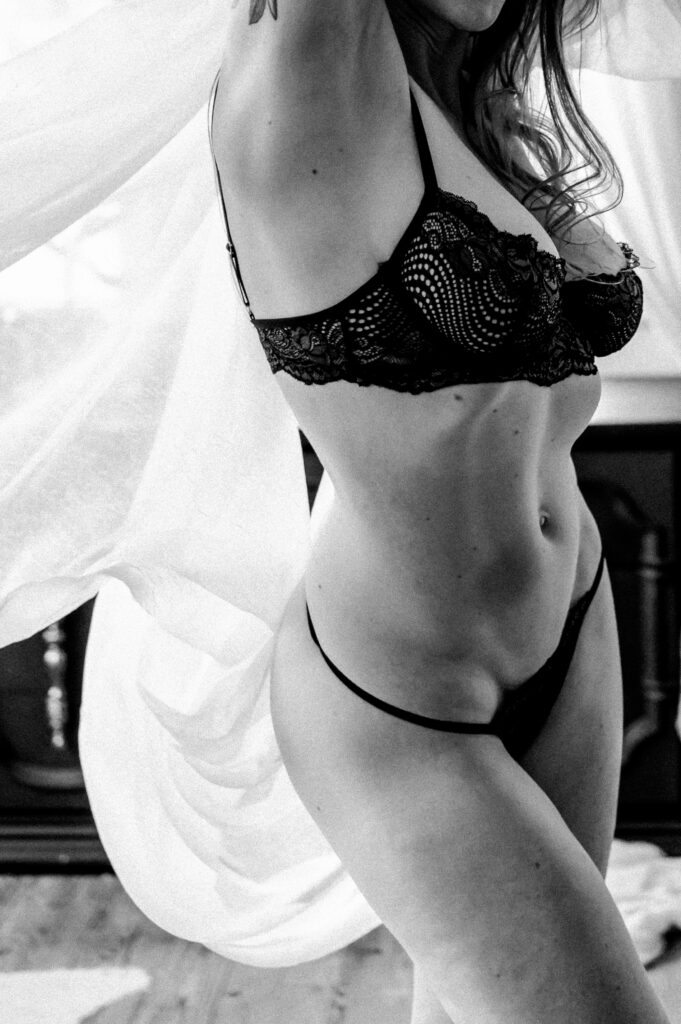
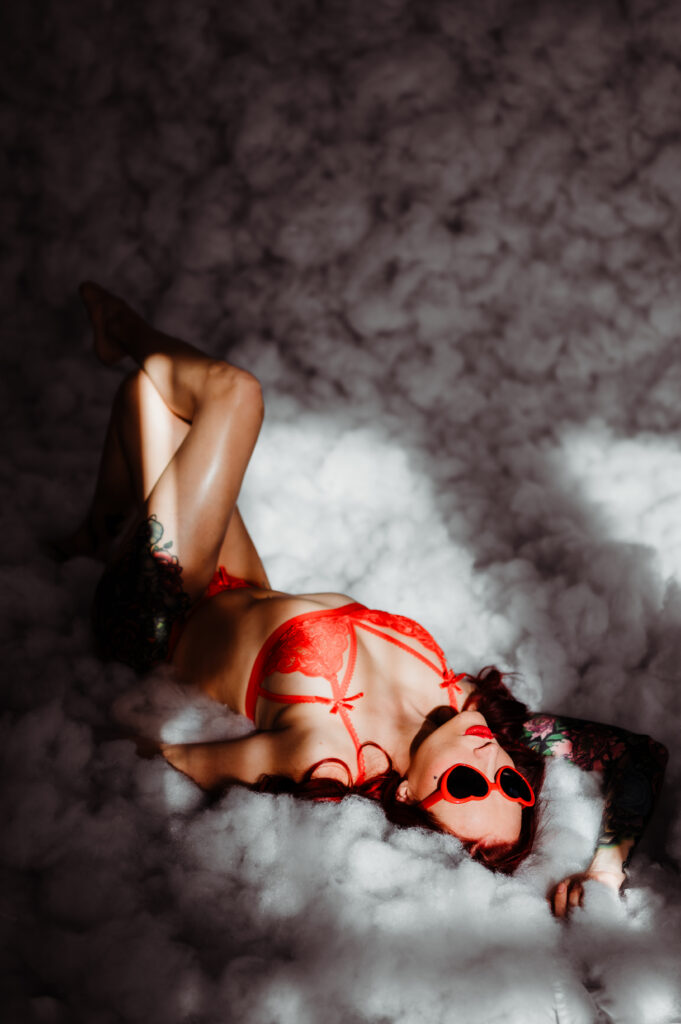
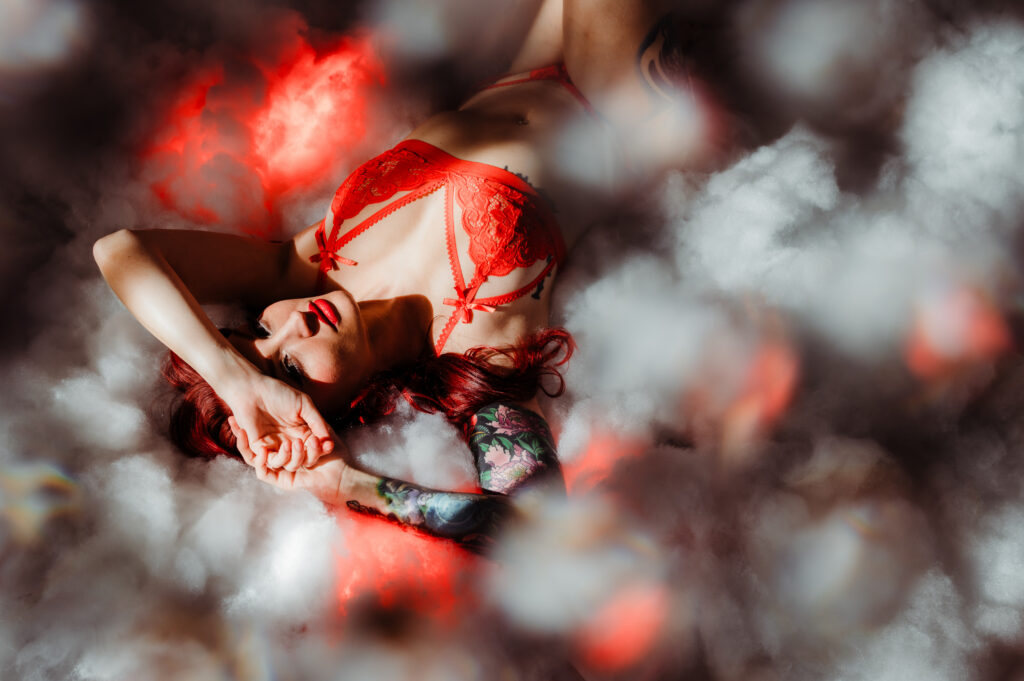
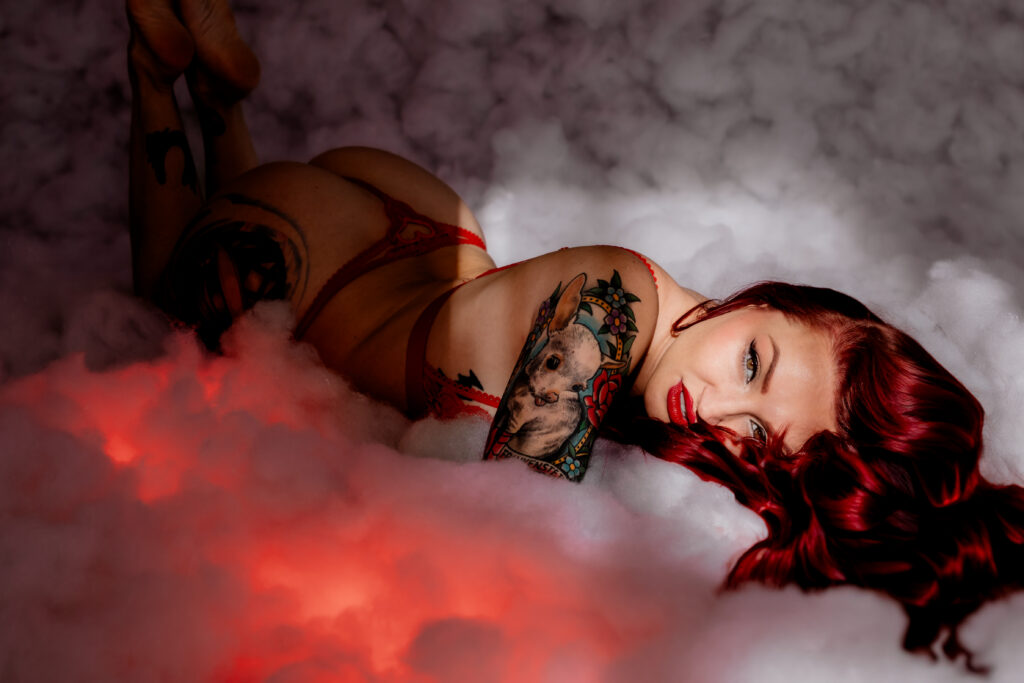
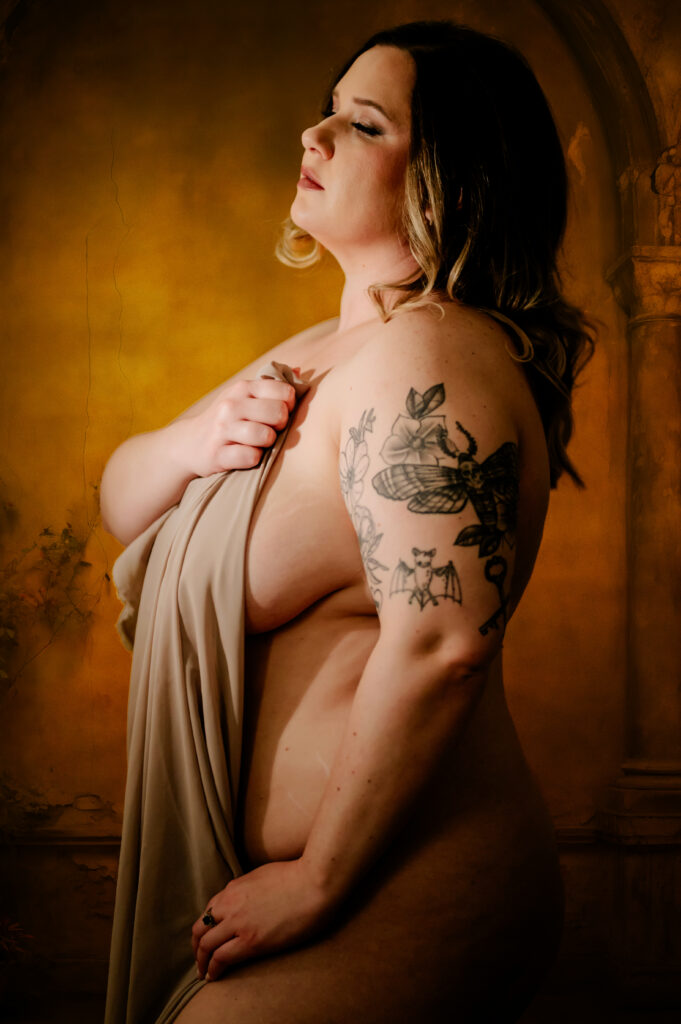
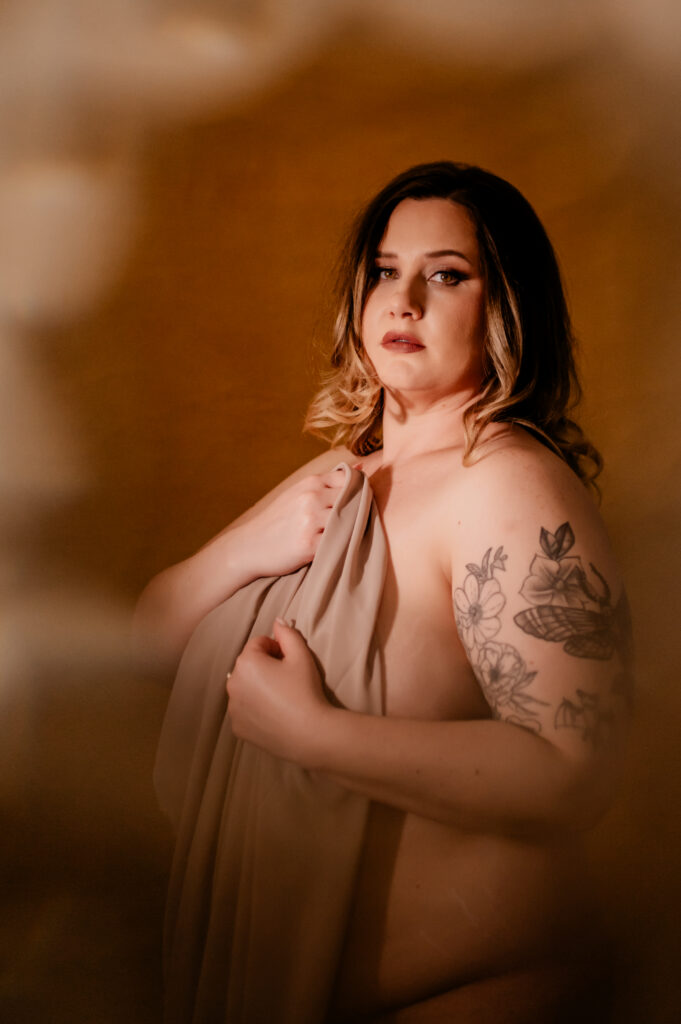
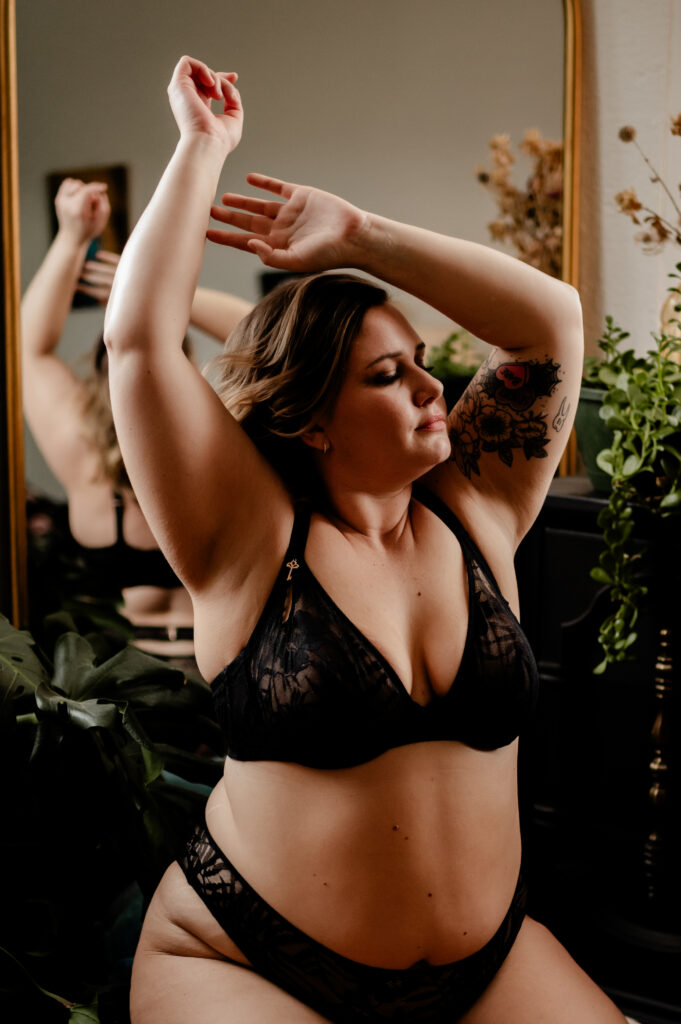
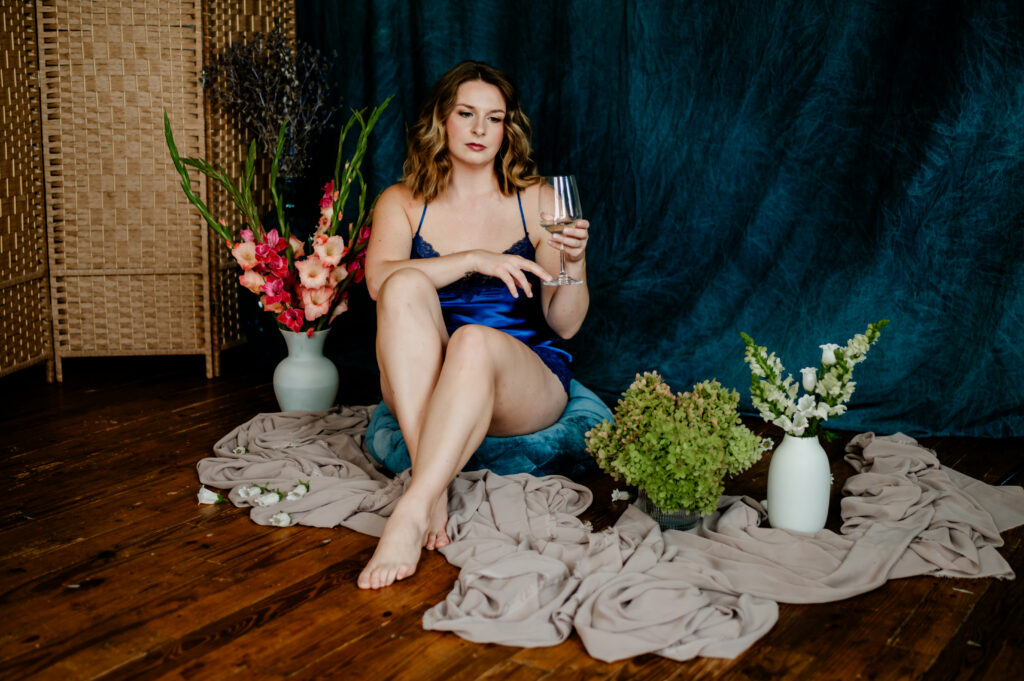
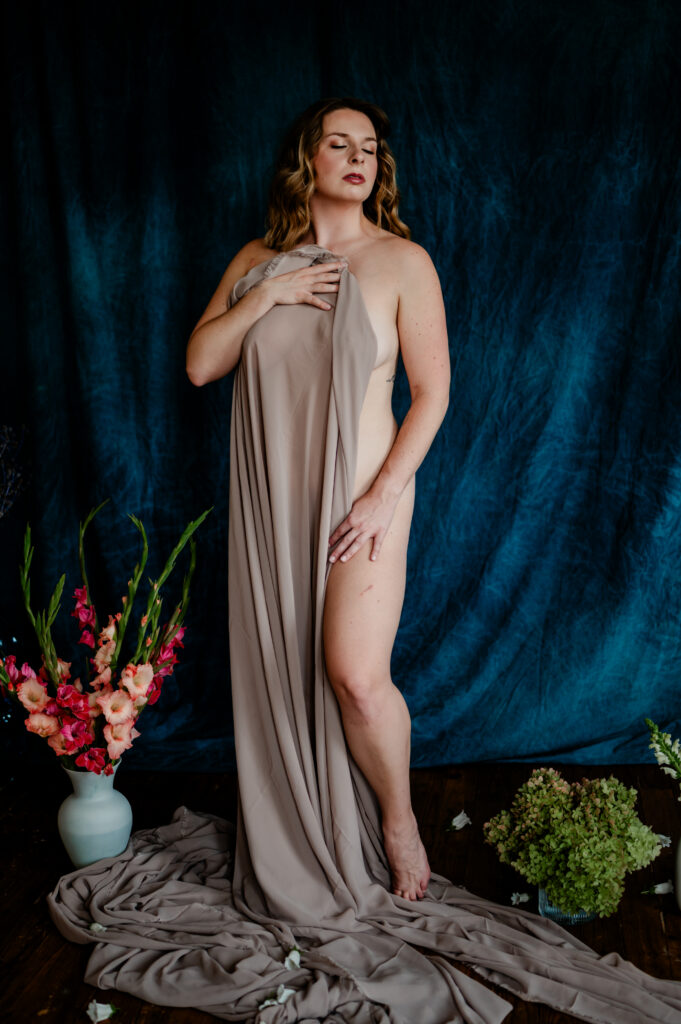
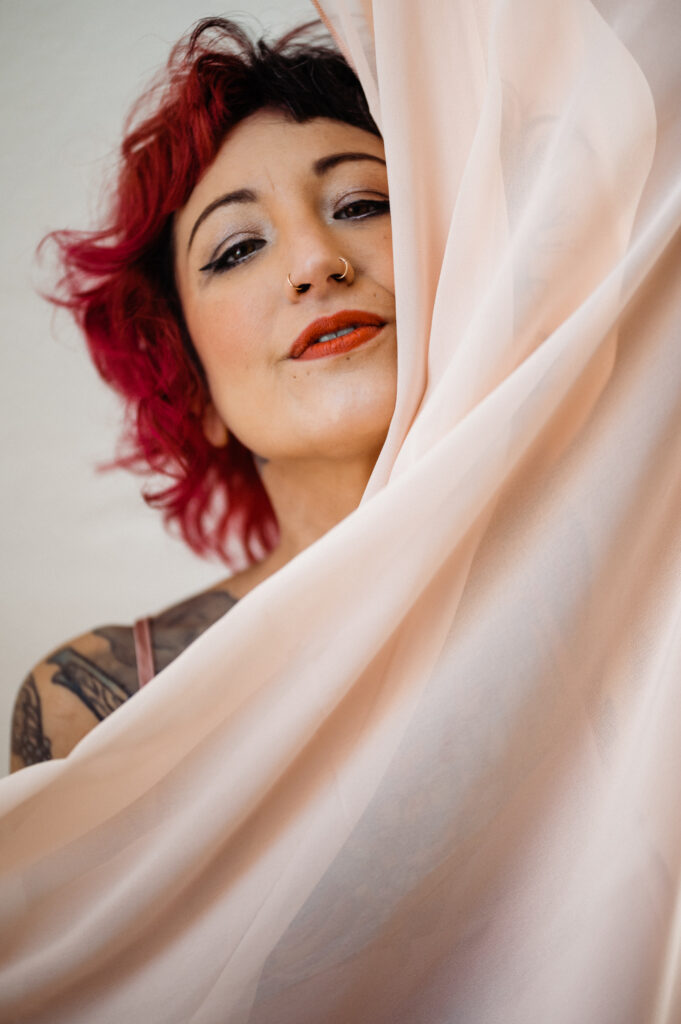
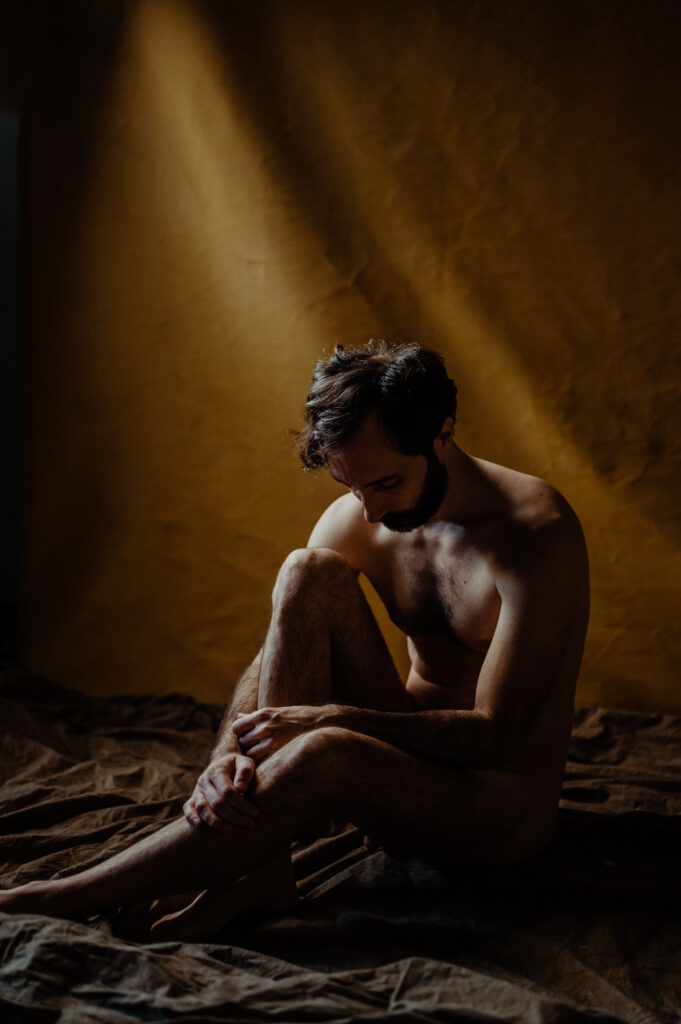
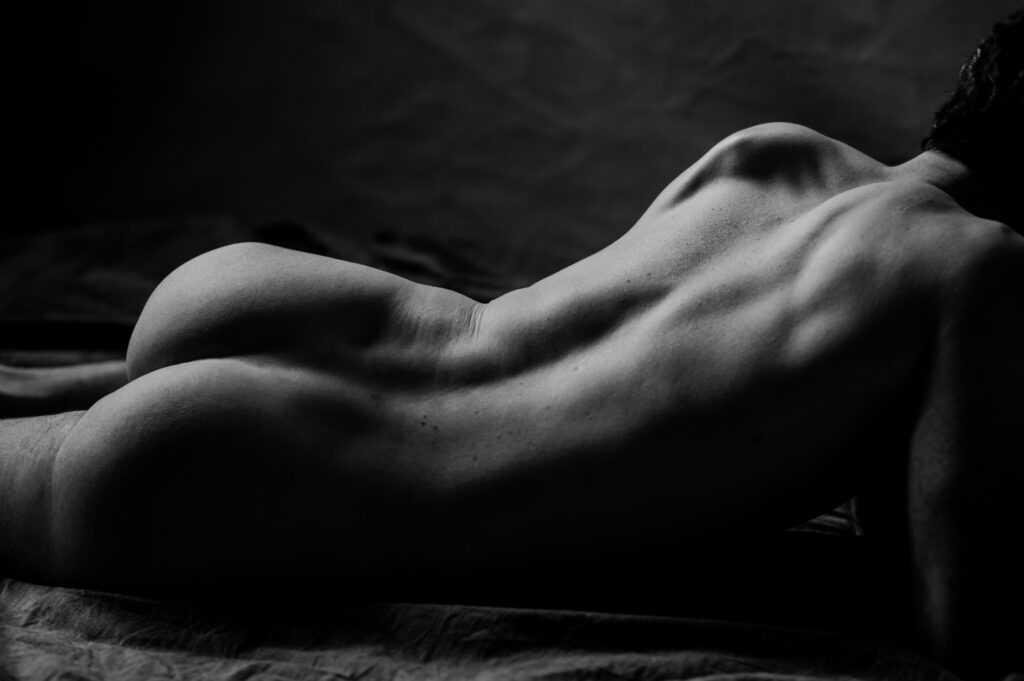
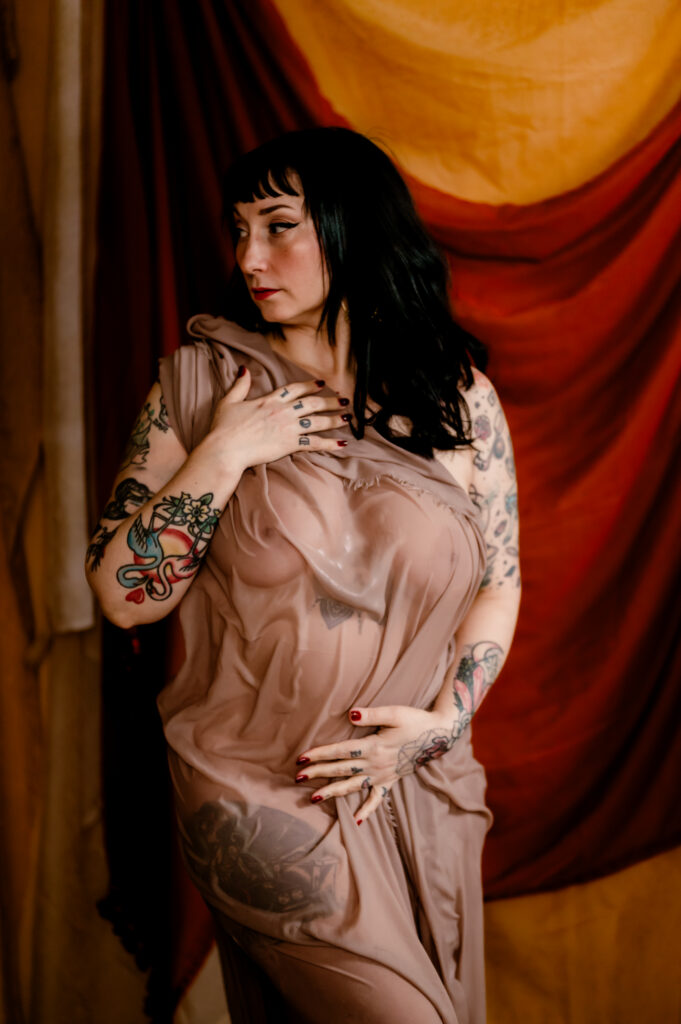
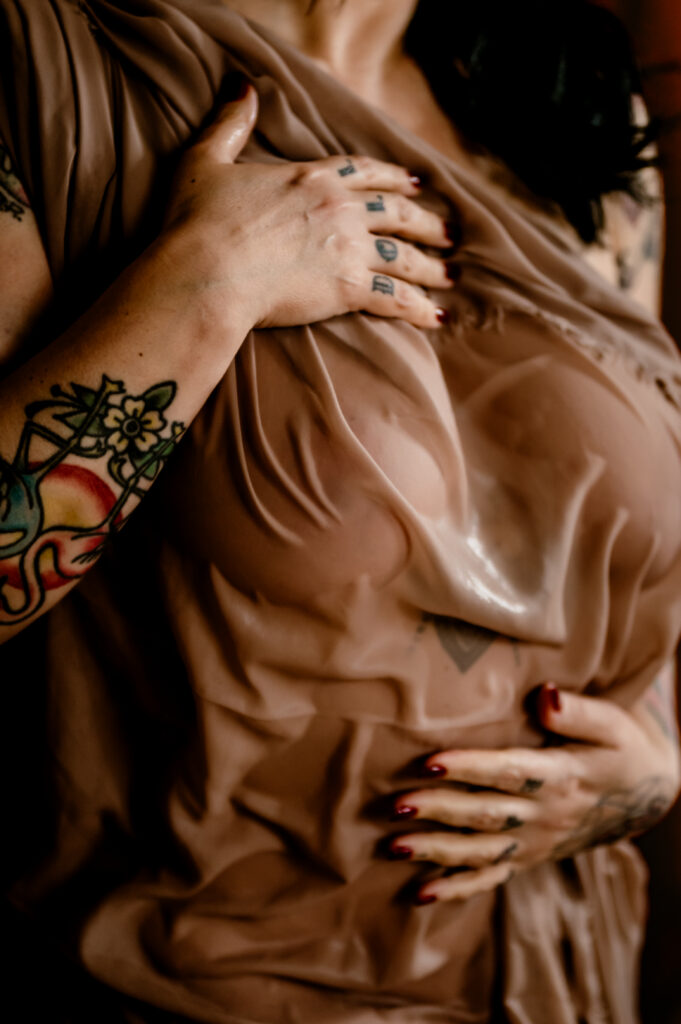
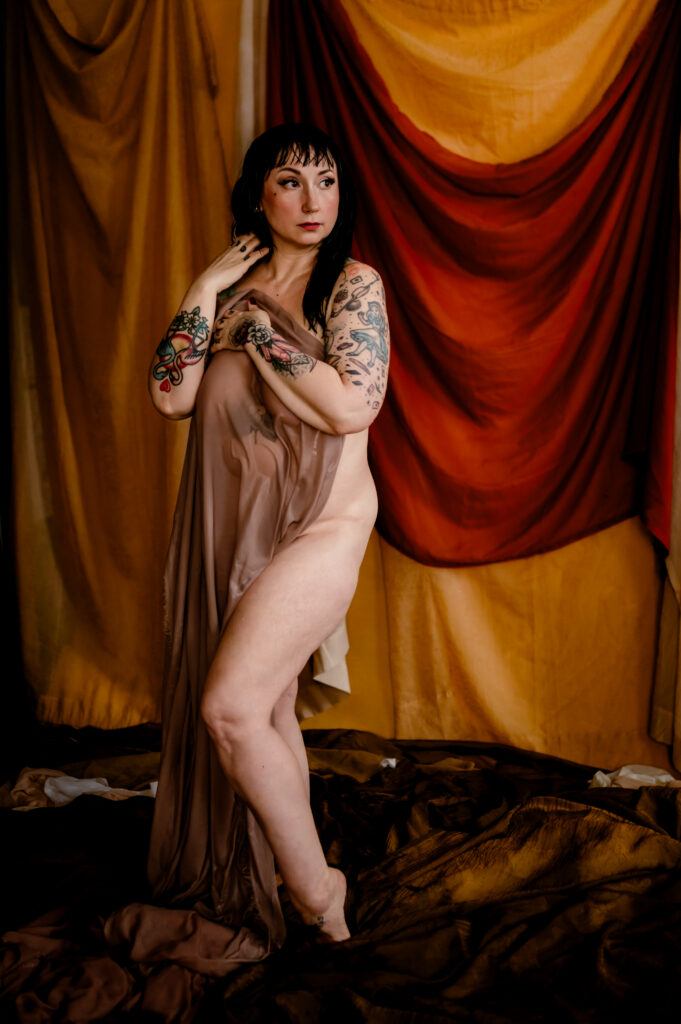
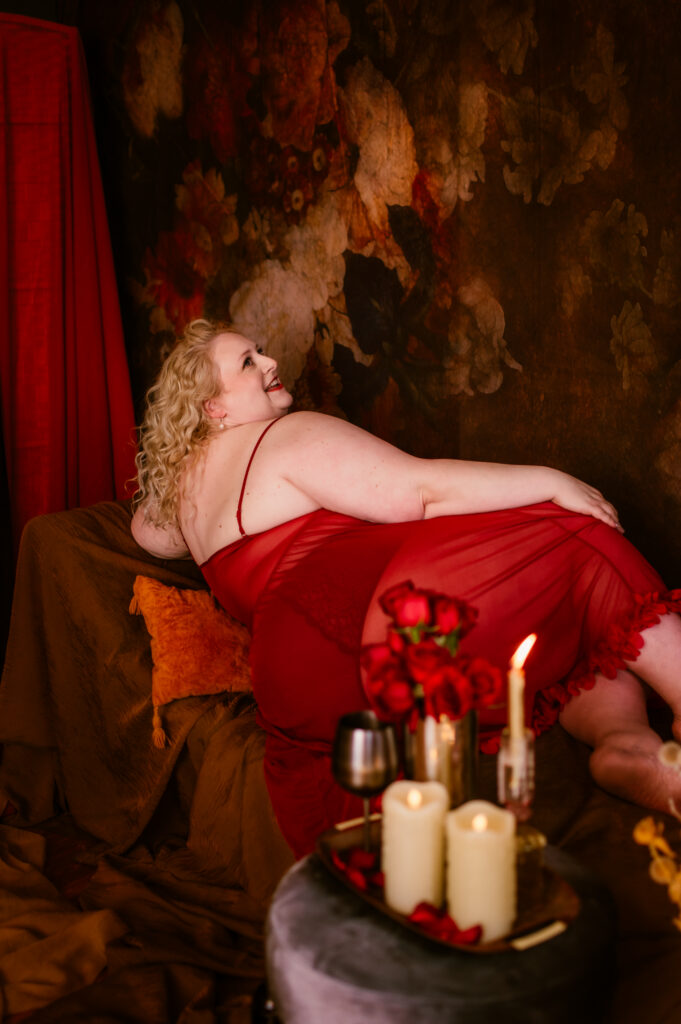
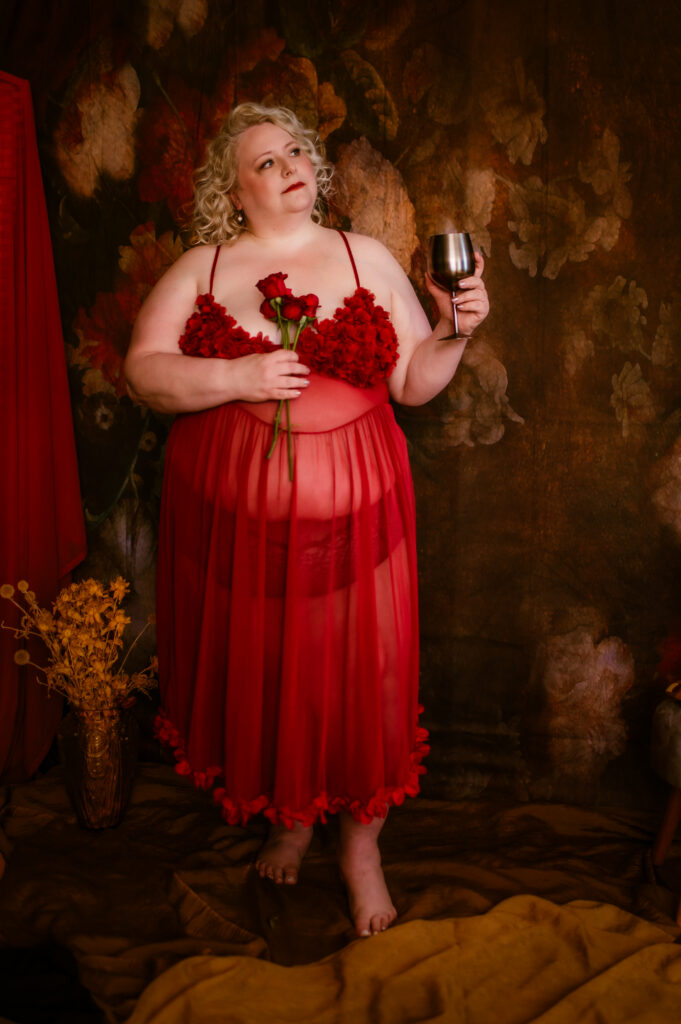
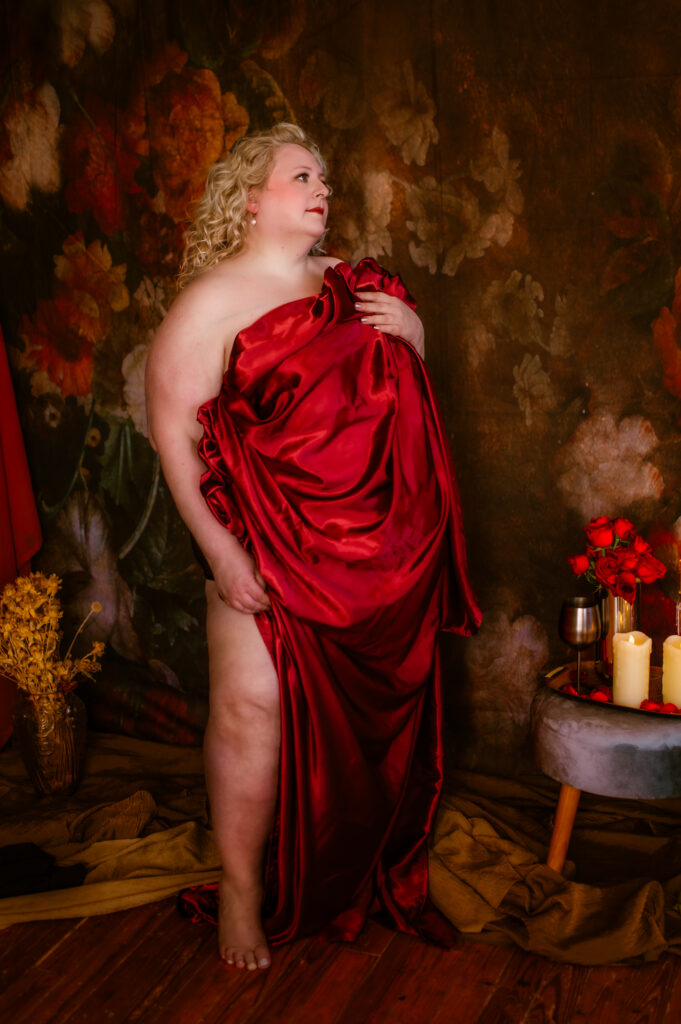
My work often leans cinematic, moody, textured, intimate, nostalgic, and emotionally driven. Depending on the session, the imagery may feel soft and painterly, dark and dramatic, surreal and dreamlike, romantic, playful, vintage-inspired, or quietly raw.
I pull inspiration from all kinds of places:
films, music, old paintings, fashion editorials, storytelling, movement, symbolism, color, human connection, and even the strange beauty of ordinary moments.
Some sessions begin with a fully formed concept, while others grow out of something much smaller — a feeling, a piece of clothing, a song, candlelight, flowers, glitter, grief, joy, softness, or simply the desire to create imagery that feels emotionally honest.
However, no matter how creative or stylized a session becomes, I never want aesthetics to overpower the humanity of the person being photographed.
I want the images to feel connected to you.
Not just visually beautiful, but emotionally alive and reflective of something real.
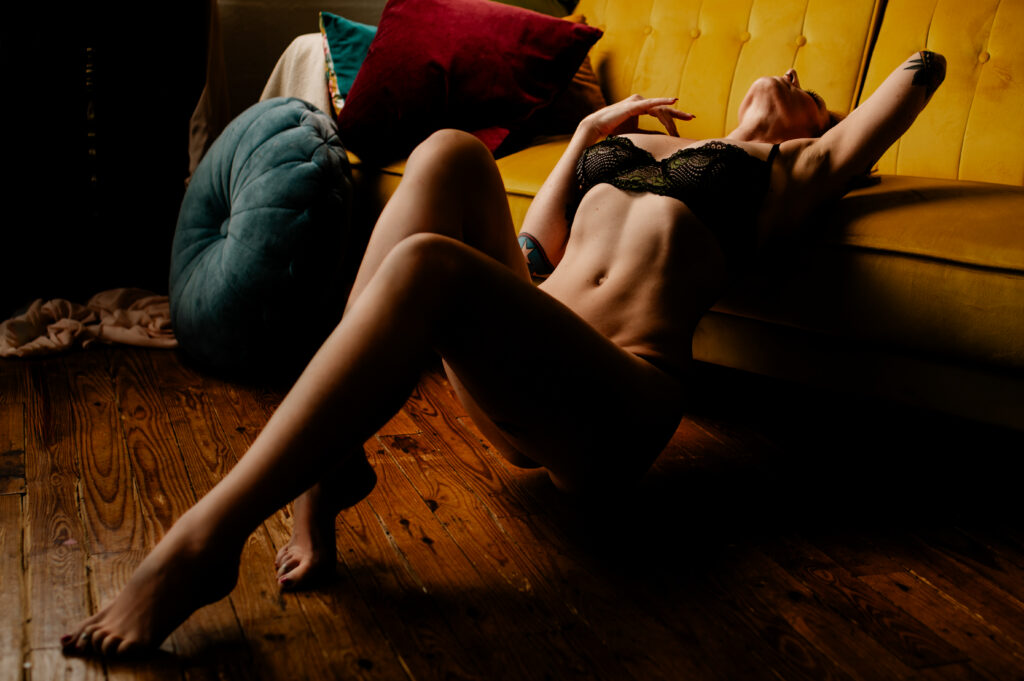
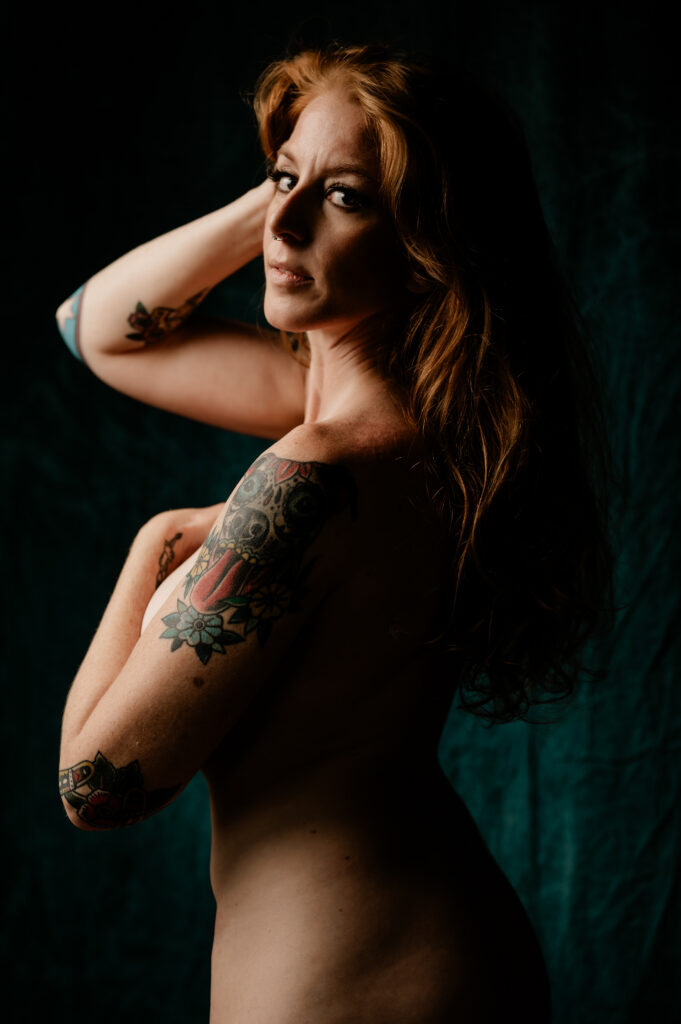
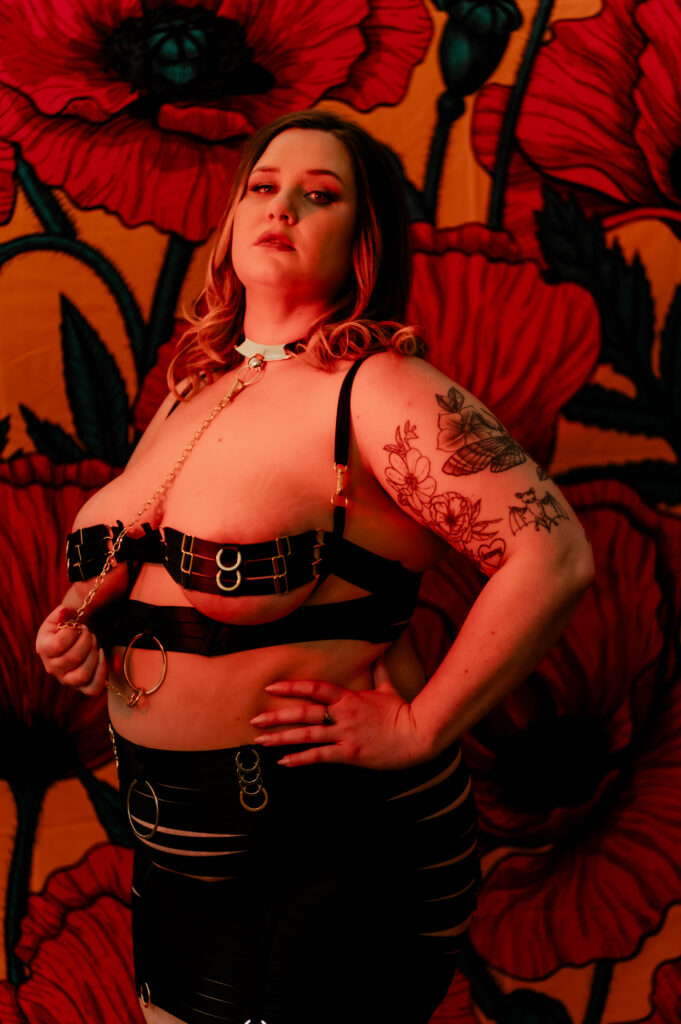
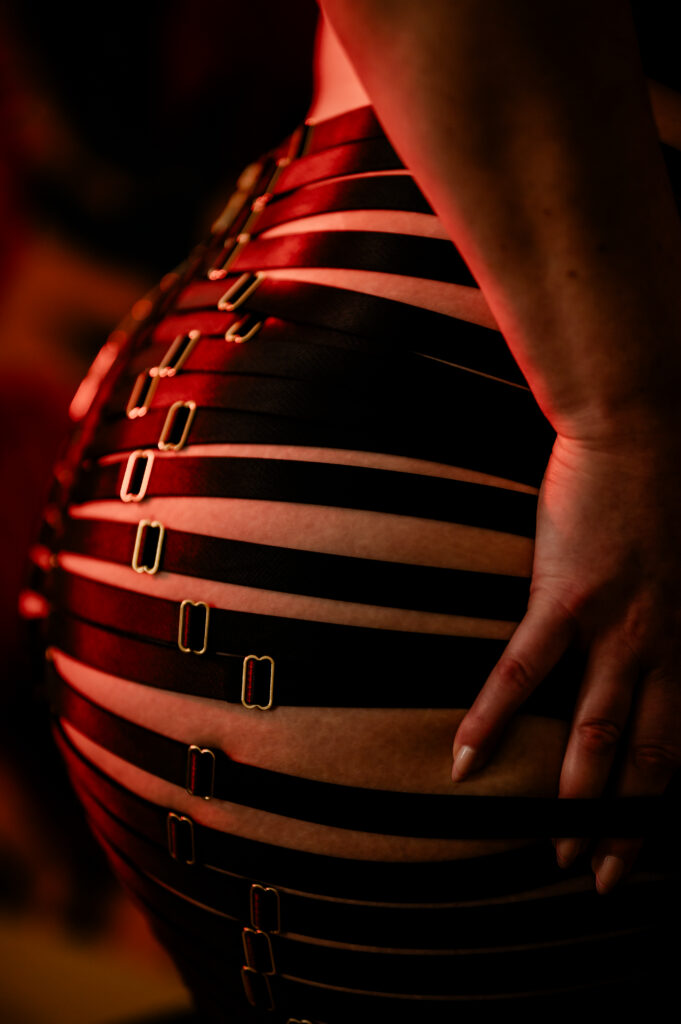
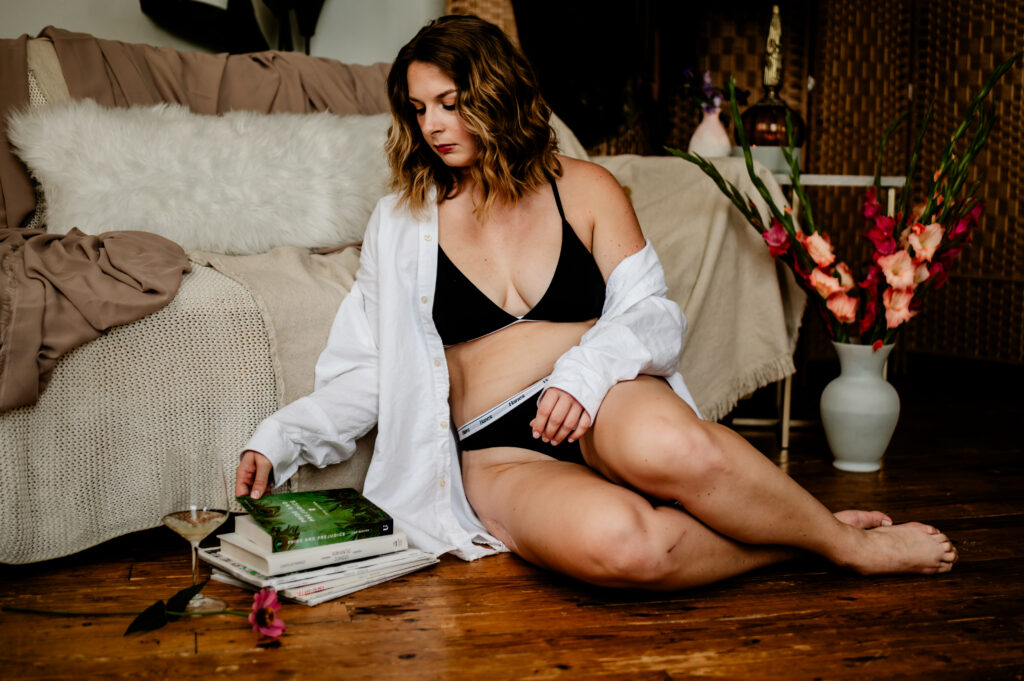
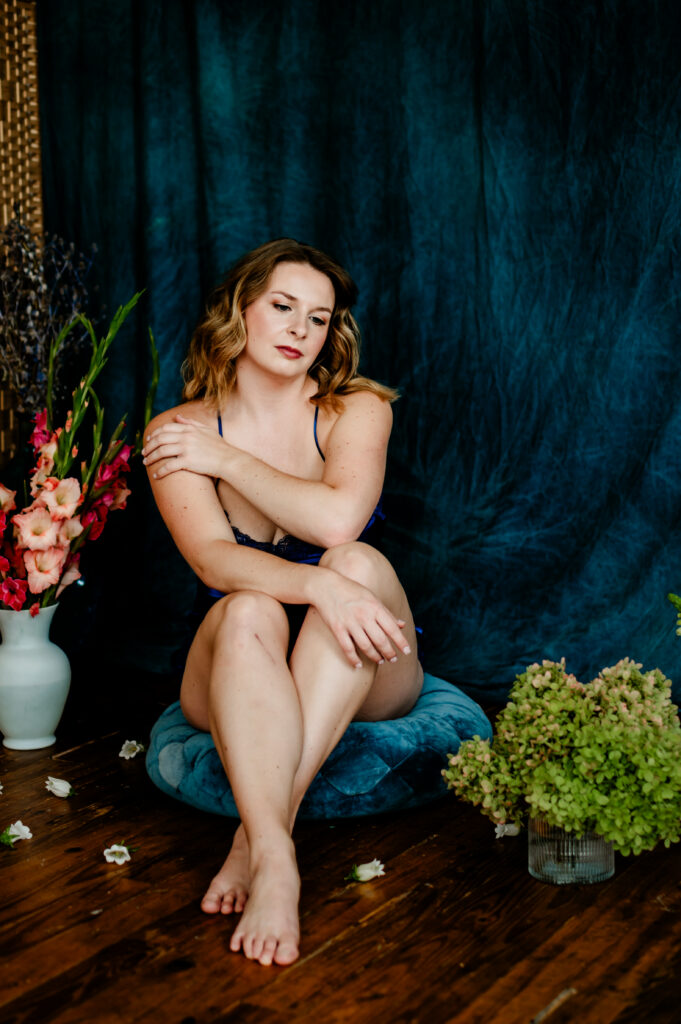
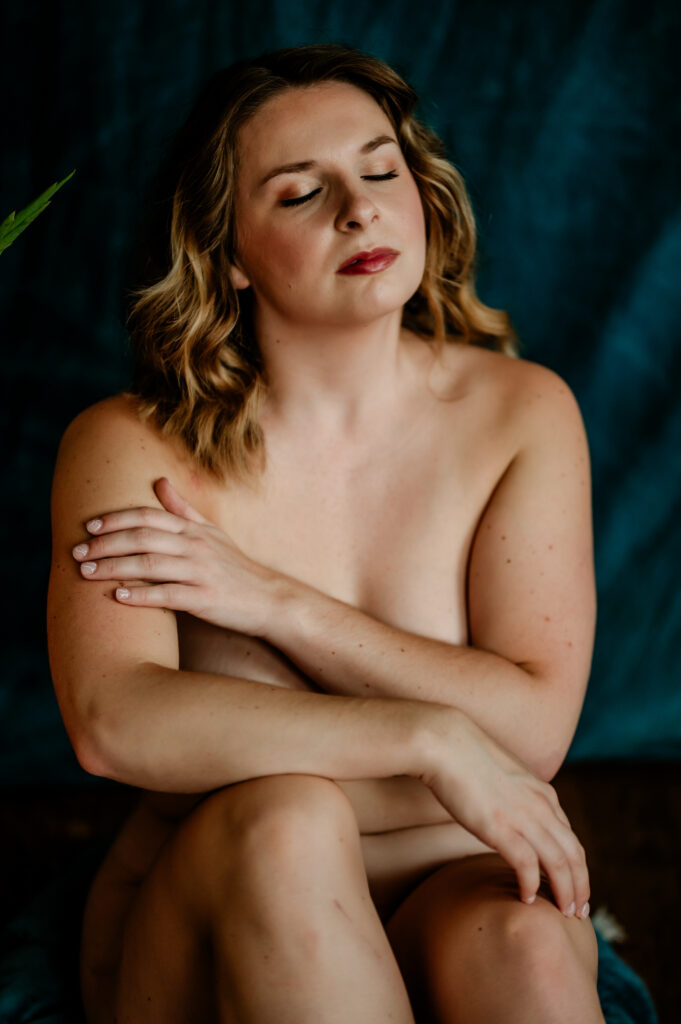
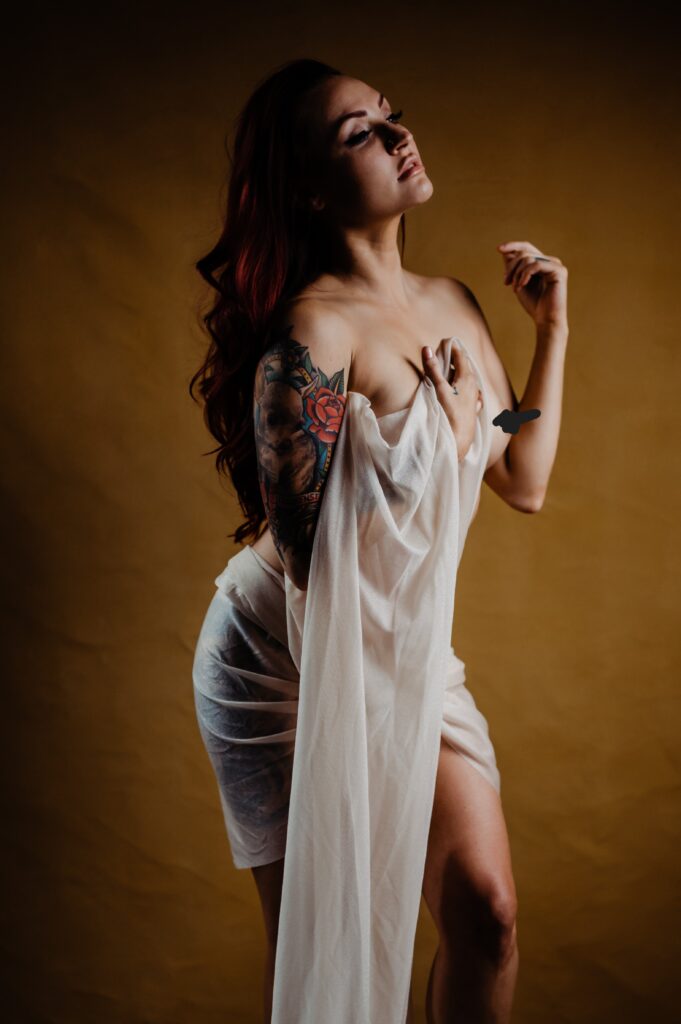
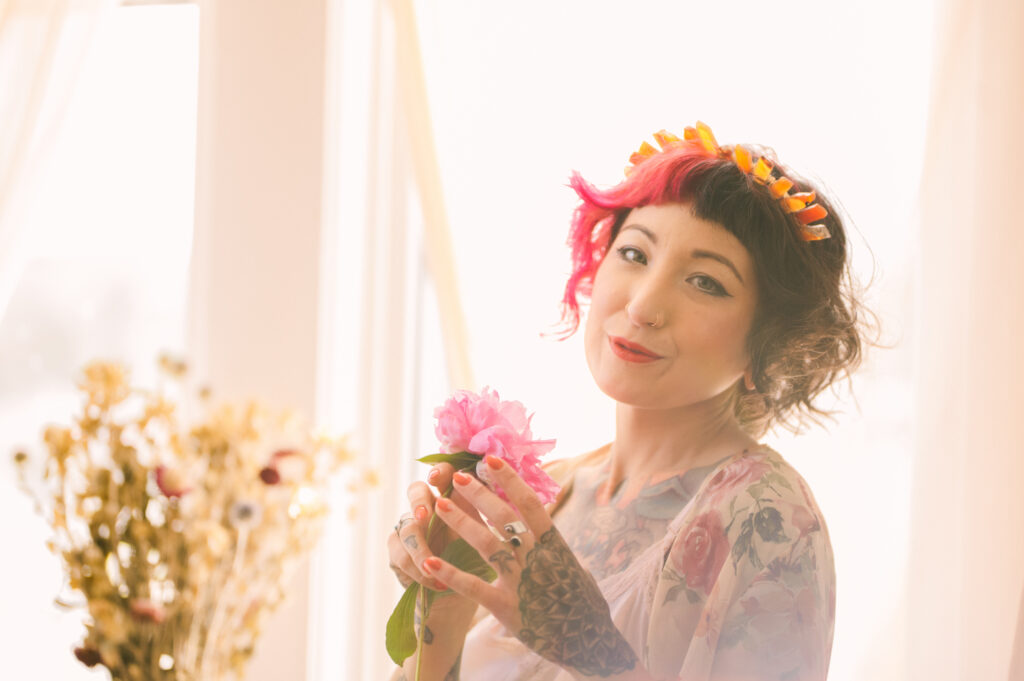
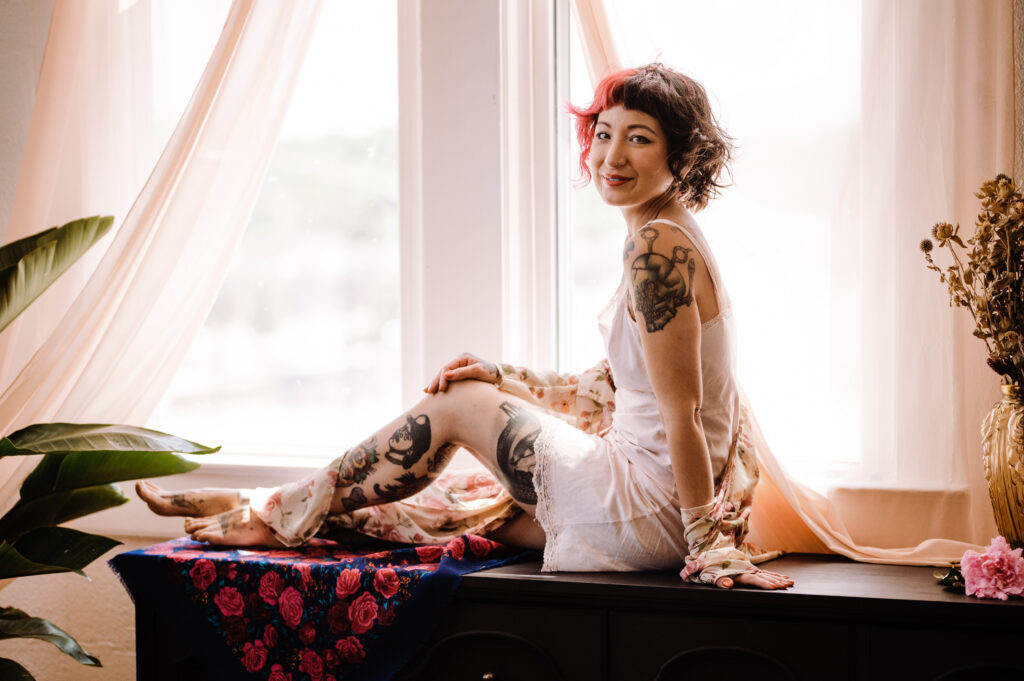
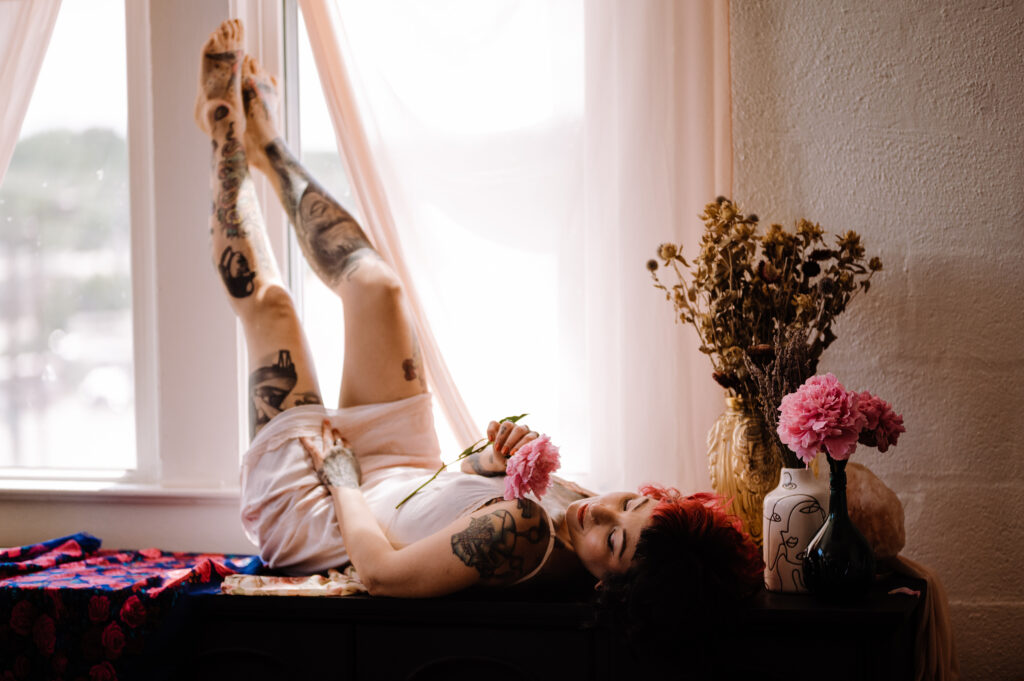
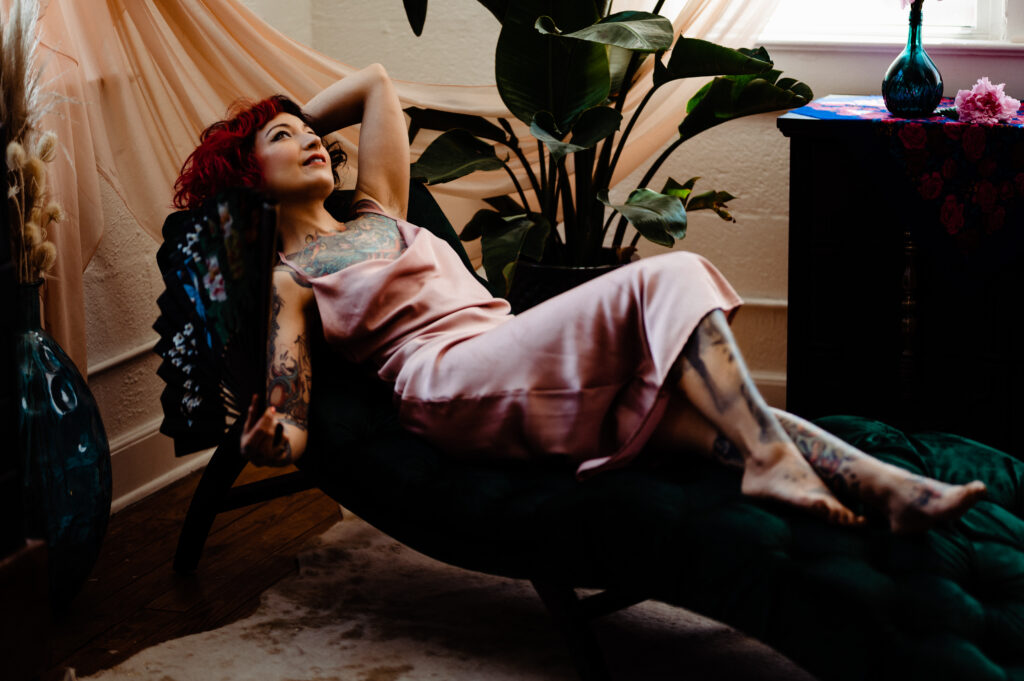
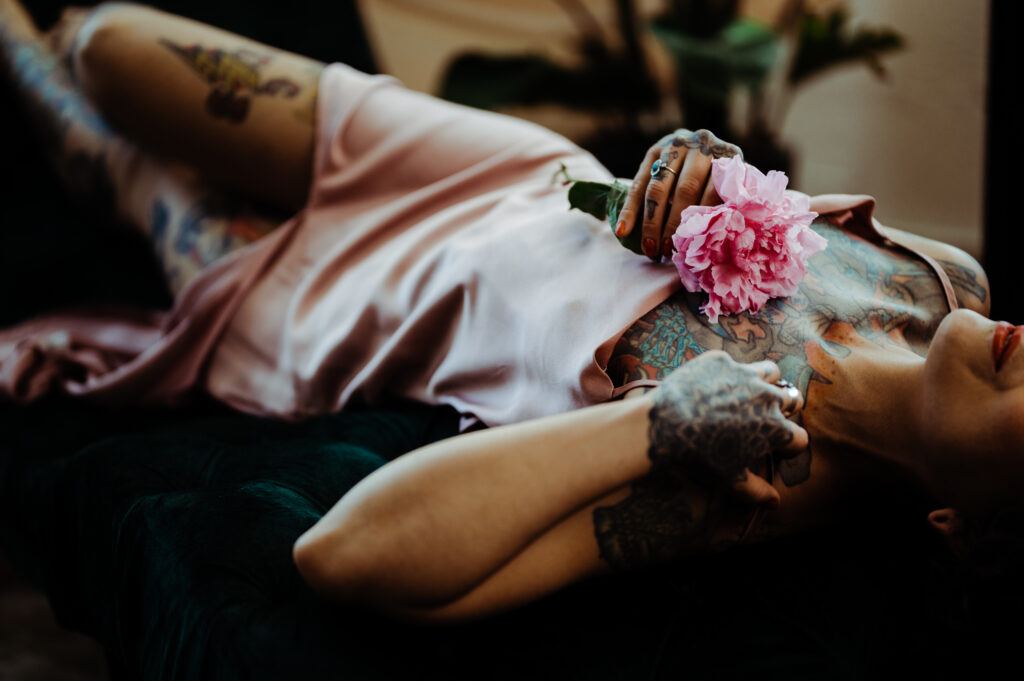
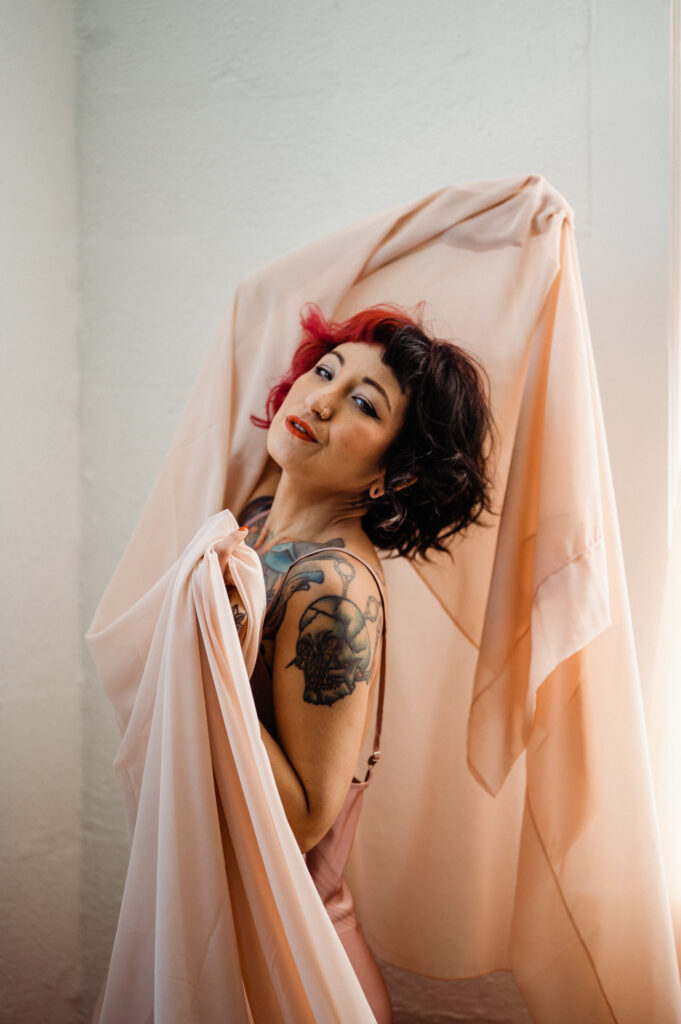
I Never Want You to Feel Like a Problem to Solve
A lot of people come into boudoir already bracing themselves.
Many arrive anticipating judgment or expecting to hear what needs to be hidden, minimized, corrected, or made “more flattering.” Others worry they’ll be told how to stand correctly or how to perform femininity in the “right” way.
And while I absolutely guide people with posing throughout their session, there’s a huge difference between guidance and correction.
That distinction matters deeply to me.
I never want your entire experience to revolve around hiding yourself.
Instead, I want you to leave feeling like:
“That was me.”
“I was actually there.”
“I existed in those photographs without apology.”
So many people spend their lives viewing themselves from the outside in — constantly evaluating whether they’re desirable enough, small enough, acceptable enough, or worthy enough to be visible.
I think being photographed with tenderness can interrupt that, even if only briefly.
The Environment Matters Just As Much As the Photos
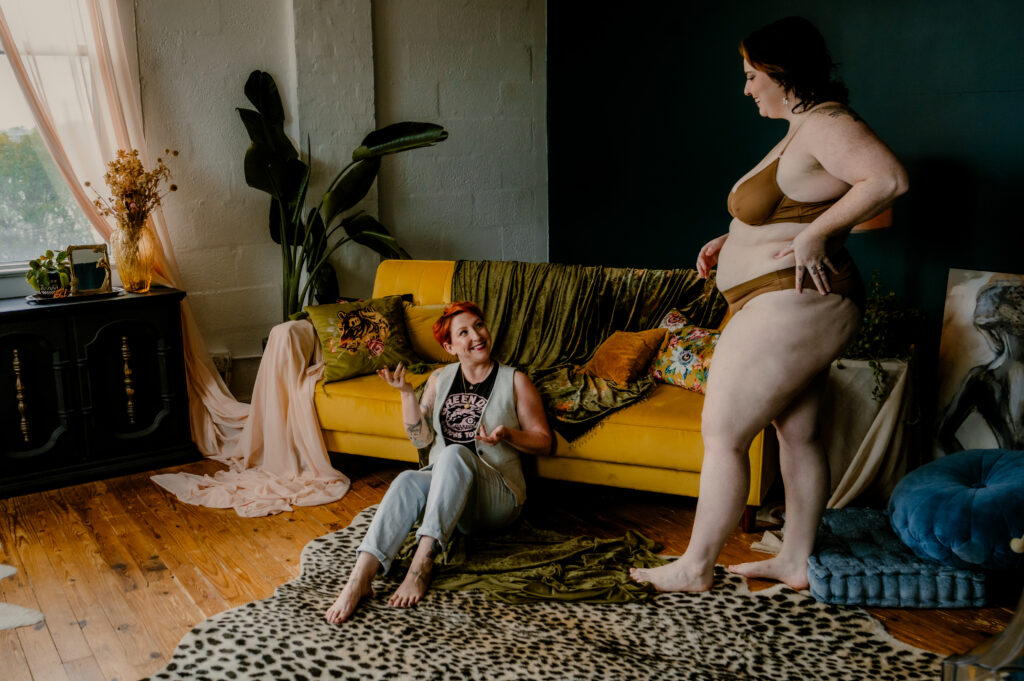
Honestly, the atmosphere of a boudoir session matters enormously to me.
I want you to feel like you can exhale.
The environment should feel spacious enough for nerves, laughter, awkwardness, curiosity, softness, collaboration, complexity, and even changing your mind halfway through the session.
Nothing is forced here.
And nothing is owed to me.
You get to choose exactly what you do or do not want photographed. You can keep your images completely private if that feels best for you. Some people arrive in elaborate styling, while others show up in oversized sweaters with bare faces and still deserve to be photographed beautifully.
Consent and autonomy are not side notes in my work.
They are foundational to it.
Because feeling emotionally safe changes what becomes possible in front of the camera.
Here what one of my clients had to say about her experience:
Why This Work Matters So Much to Me
The longer I do this work, the more I realize boudoir is often about far more than photographs.
Over the years, I’ve watched people reconnect with themselves after long periods of disconnection. I’ve watched clients cry during image reveals because they realized how cruel they had been to themselves for years. I’ve also watched people see softness, power, humor, sensuality, grief, resilience, beauty, and humanity in themselves all at once.
And honestly, I think that matters deeply.
Especially in a world constantly trying to convince people they need to fix themselves before they deserve visibility.
Now, I don’t think photographs alone heal people. And Boudoir does not replace therapy!
However, being witnessed honestly can be incredibly powerful. So can existing in front of a camera without punishment or shame. More than anything, I think there’s something meaningful about creating spaces where people are allowed to take up space fully and truthfully.
To me, boudoir isn’t about performing confidence or achieving perfection. It’s about showing up honestly, even if your relationship with yourself is still complicated.
At its core, I think this work is about giving yourself permission to be visible exactly as you already are, rather than postponing your existence until some future version of yourself appears.
Because you do not need to become someone else before you deserve to be seen.