
If you’ve ever looked at a photo of yourself and immediately started picking it apart—
zooming in, criticizing, wishing you looked different—
I want you to know something first:
That reaction didn’t come from nowhere.
You weren’t born analyzing your body this way.
You were taught to.
As a Nashville boudoir photographer, I see this all the time. People come into their sessions feeling excited—but also nervous about what it will feel like to see themselves. And when they finally do, that inner critic can get loud fast.
We live in a world that constantly tells us our worth is tied to how we look—and not just how we look, but how closely we match a very narrow, often unrealistic standard. So when you see a photo of yourself and feel that wave of discomfort, criticism, or even shame… it makes sense.
It’s not a personal failure.
It’s a learned response.
And the good news?
Anything learned can be unlearned—or at the very least, softened.
If seeing photos of yourself feels triggering, I want to gently walk you through a few ways to shift your perspective. Not perfectly. Not overnight. But with more awareness, compassion, and choice.

1. Acknowledge that you’re likely seeing yourself in an overly critical way
Our brains are wired to focus on what feels important—or what feels like a threat.
And in a culture that equates beauty with value and lovability, anything we’ve been taught is a “flaw” can start to feel like a problem that needs fixing.
So when you look at a photo and immediately zero in on the parts you like the least, it’s not because those parts define you—it’s because your brain has been trained to prioritize them.
The more you focus on those areas while ignoring everything else, the more they start to take over your perception of the entire image.
Just noticing this pattern as it’s happening can begin to shift it.
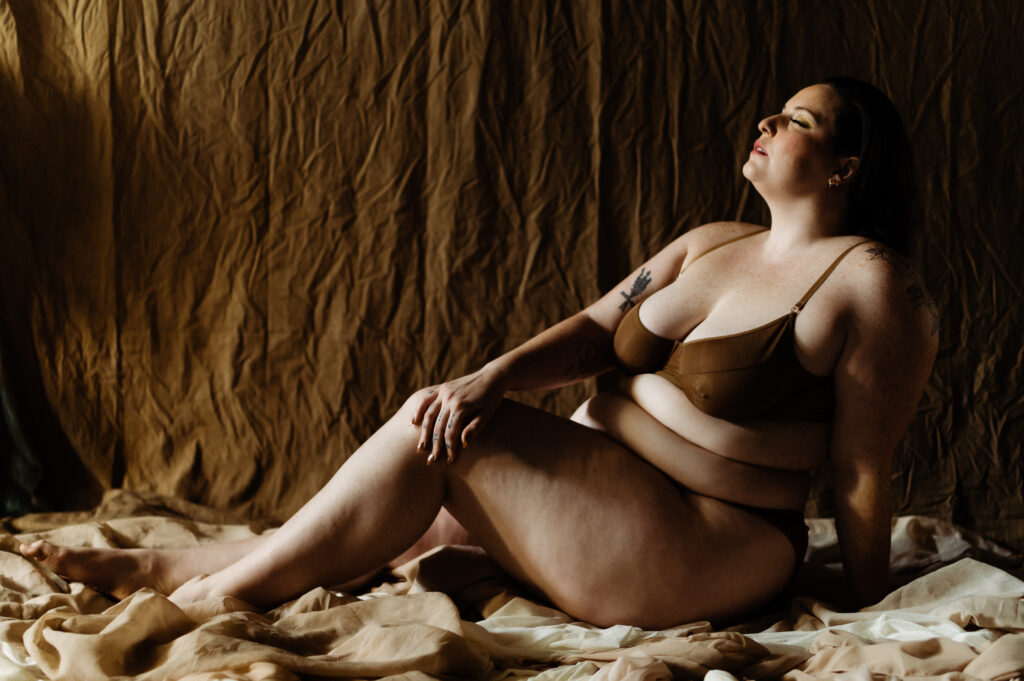
2. Recognize that part of what you’re feeling might simply be unfamiliarity
Sometimes the discomfort you feel has less to do with how you actually look… and more to do with what you’re used to seeing.
Your mirror image is flipped.
Your selfies are often filtered or angled in very specific ways.
And most of us unconsciously pose in ways we’ve learned feel “flattering.”
So when you see a photo that doesn’t match the mental image you have of yourself, your brain flags it as “off” or “wrong.”
Not because it is—but because it’s unfamiliar.
When something doesn’t match what we expect, our brains tend to exaggerate the differences. That’s when things can start to feel distorted or uncomfortable.
This isn’t about you looking “bad.”
It’s about your brain adjusting to a different version of you.

3. Allow yourself to feel angry
If you have a strong emotional reaction to photos of yourself, there’s usually a reason.
You’ve spent your life being shown what you’re “supposed” to look like.
You’ve been sold ideals that are often unrealistic, heavily edited, and constantly shifting.
You’ve been taught—directly or indirectly—that looking “wrong” has consequences.
That’s a lot to carry.
So if part of you feels angry about that?
Good.
That anger makes sense.
You’ve been misled. Over and over again.
And that’s worth acknowledging.

5. Redirect your attention to what the photo actually represents
A photo is more than a still image of your body.
It’s a moment.
A memory.
A version of you that existed in time.
So instead of asking, “How do I look?”
Try asking:
- What was I feeling here?
- What was happening in this moment?
- What does this photo represent in my life?
When you shift your focus from appearance to experience, the image starts to hold something deeper.
It becomes less about judgment—and more about presence.
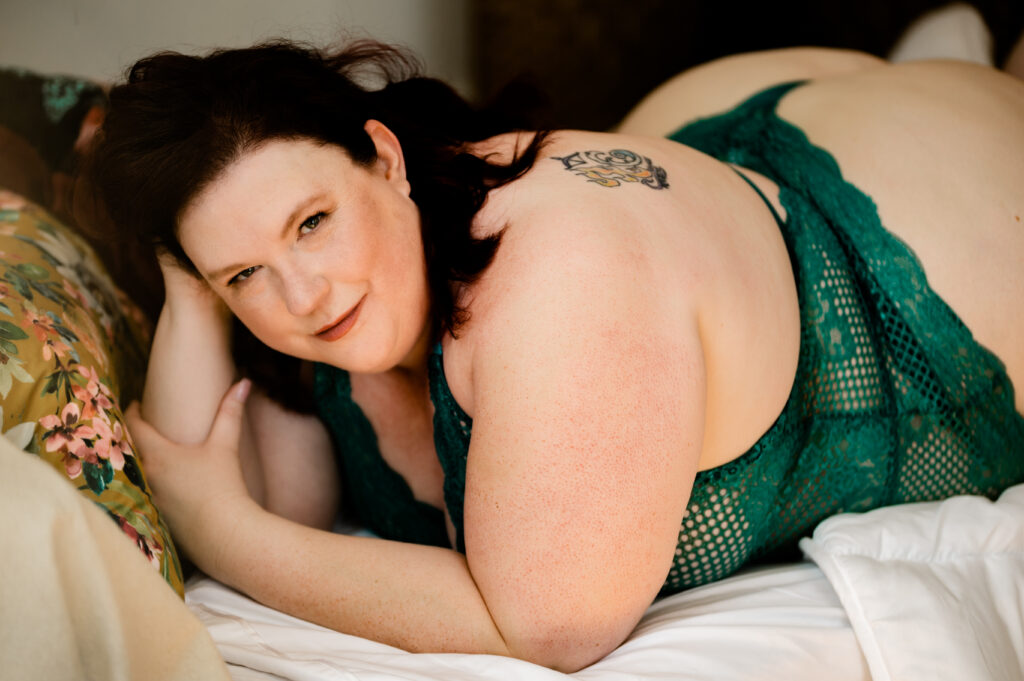
Why this matters in a boudoir experience
This is something I gently guide my clients through as a Nashville boudoir photographer.
Because boudoir isn’t just about creating beautiful images—it’s about learning how to receive them.
To see yourself without immediately tearing yourself down.
To sit with discomfort without letting it define the experience.
To slowly, over time, start seeing yourself with more neutrality… and sometimes even appreciation.
That shift doesn’t always happen instantly.
But when it does start to happen, it’s powerful.
And don’t forget to breathe
Seriously.
Pause.
Take a breath.
Give yourself a moment before reacting.
You don’t have to decide how you feel about a photo instantly.
You’re allowed to take your time.

Some of my favorite recourses!
Teri Hofford, who I ADORE and you should absolutely follow on social media, gave a tedx talk last year that is absolutely worth watching. You can watch it below!
If you are a book nerd like me- here are my top three favorites!
The Geode Theory By Teri Hofford (full of gems!)
The Body Is Not an Apology, The Power of Radical Self-Love by Sonya Renee Taylor (Absolutely life changing!)
The Beauty Myth by Naomi Wolf (slightly outdated, but still a classic and well worth the read!)
I hope this helps, friend!
And while a boudoir session is not therapy, I have seen again and again how powerful of a tool it can be in fostering a healthier relationship with how you view and relate to your body – in photos and in life. If you feel like this is a path you’d like to explore- I’m here to chat through it with you! Click below to reach out! No judgment. No pressure.

xoxo-
Amy


